
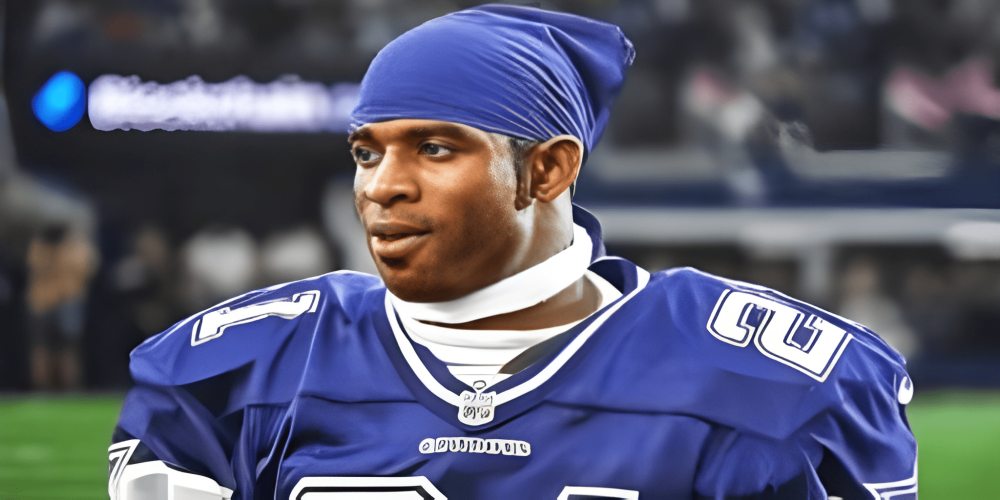
Deion Sanders: The Evolution of Prime Time from Hall of Famer to Cultural Architect
In the annals of American sports history, few figures have commanded attention quite like Deion Sanders. Known by a constellation of nicknames—Prime Time, Neon Deion, and now Coach Prime—Sanders has successfully navigated a rare trajectory from two-sport professional superstar to transformative college football head coach. His journey is not merely a story of athletic excellence but a case study in personal branding, cultural influence, and the modern evolution of leadership. As of 2026, Deion Sanders is in the midst of perhaps his most demanding yet rewarding chapter, reshaping the University of Colorado Boulder football program while simultaneously redefining what it means to be a coach in the era of Name, Image, and Likeness deals and the transfer portal.
The Forging of a Dual-Sport Icon
Before Deion Sanders became the face of a university athletic department, he was simply one of the most gifted natural athletes the world has ever seen. Born on August 9, 1967, in Fort Myers, Florida, Sanders exhibited a level of confidence and skill that set him apart from his peers from a very young age . He parlayed this talent into a stellar college career at Florida State University, where he earned the moniker "Prime Time" for his ability to perform spectacularly when the lights were brightest.
His professional career is a litany of unprecedented achievements. Drafted by the Atlanta Falcons with the fifth overall pick in the 1989 NFL Draft, Sanders did not just play cornerback; he revolutionized the position . He combined shutdown coverage with the return skills of a running back, amassing 53 career interceptions and returning nine of them for touchdowns. His 1,331 interception return yards rank second in NFL history . In 1994, while playing for the San Francisco 49ers, he was named the Associated Press NFL Defensive Player of the Year, a testament to his ability to essentially erase half of the football field from the opposing team's game plan .
Simultaneously, Sanders pursued a career in Major League Baseball, a feat that is nearly impossible in the modern era of specialization. As an outfielder for the New York Yankees, Atlanta Braves, Cincinnati Reds, and San Francisco Giants, he displayed blazing speed and a .263 career batting average . In 1992, he led the National League with 14 triples. He remains the only athlete in history to play in both a Super Bowl and a World Series . This dual-sport capability culminated in his election to the Pro Football Hall of Fame in 2011 , solidifying his status as the gold standard for two-way athletic excellence. His career earnings from playing days alone approached nearly $60 million combined between the NFL and MLB , setting the financial foundation for his post-playing career.
The Transition to Prime Mentor
Upon retiring from playing, Deion Sanders could have easily rested on his laurels. Instead, he channeled his relentless energy into media and, eventually, coaching. Unlike many former stars who struggle to connect with the younger generation, Sanders found his true calling as a mentor. He took over the program at Jackson State University, a Historically Black College and University (HBCU) competing in the Southwestern Athletic Conference (SWAC) .
His tenure at Jackson State was nothing short of revolutionary. By recruiting top-tier talent that would typically sign with Power Five schools—most notably his son, quarterback Shedeur Sanders, and eventual Heisman Trophy winner Travis Hunter—Sanders proved that exposure and star power mattered regardless of conference affiliation. He led the Tigers to a 27-6 record over three seasons, injecting a level of energy and media scrutiny into HBCU football that had not been seen in decades. He famously stated that he came to Jackson State "to provoke change," and he did just that .
However, the pull of the Power Five was inevitable. In 2022, Deion Sanders accepted the head coaching job at the University of Colorado Boulder. The program he inherited was arguably the worst in the Power Five at the time, having finished the 2022 season with a disastrous 1-11 record. The facilities were in need of updating, the roster was depleted, and the culture was broken. Sanders immediate response was to execute a massive roster overhaul, bringing in dozens of transfer players, including his sons Shedeur and Shilo. This aggressive strategy was controversial, but Sanders defended it as necessary surgery to save a dying patient.
The Financial Empire of Coach Prime
As of 2025 and into 2026, Deion Sanders net worth is estimated to be between $45 million and $60 million . This wealth is generated by a combination of his past salaries and his current high-stakes coaching contract. In 2025, Sanders signed a massive five-year extension with Colorado worth $54 million, which averages out to $10.8 million annually . This places him among the top five highest-paid coaches in college football, a remarkable ascent for someone who was coaching at an HBCU just a few years prior.
His current contract includes base salaries that escalated dramatically from $5.9 million in his first two years to a reported $10 million for the 2025 season . But his income does not stop at the sidelines. Deion Sanders has curated a portfolio of endorsement deals that few active coaches can match. He maintains partnerships with Nike, Pepsi, Burger King, American Express, and Aflac, leveraging his "Prime" brand that transcends sports . He has also worked as an analyst for CBS Sports and the NFL Network, and in 2026, he is set to appear in a Netflix series titled "Prime Time," further expanding his media footprint . This business acumen allows him to speak to his players with authority not just about football, but about building generational wealth.
Redefining Culture and Academics
Perhaps the most significant transformation under Deion Sanders at Colorado has been the cultural and academic turnaround. Initially, critics assumed that Sanders flashy demeanor and focus on "swagger" would translate to a lack of discipline in the classroom. The reality has proven to be the exact opposite. In 2024, the Colorado Buffaloes football team achieved a cumulative GPA of 3.083, the highest in program history . This shattered the previous record and marked the first time the team had ever eclipsed a 3.0 GPA. Former NFL safety Ryan Clark highlighted this nuance, noting that Sanders has emphasized that "education is first and football is second" .
Sanders has repeatedly lectured his team about the statistics that 90 to 95 percent of them will not go professional, urging them to focus on "life" and "the next elevation" . This focus on holistic development extends to unique financial initiatives. In 2024, Sanders launched "The 21 Program" in partnership with Elevations Credit Union. Through this program, he deposited $2,121 into 529 savings plans for the children of eight of his players . The number 21, his iconic jersey number, serves as a symbolic commitment to the future. Cam Newton praised Sanders for this move, highlighting that Sanders is dedicated to "transfer a boy into a man" rather than merely winning games . These actions suggest that while Deion Sanders demands excellence on the field, he is equally invested in the human development of his roster.
Evolution of Coaching Strategy
Coaching at the Power Five level requires constant adaptation. After a disappointing 3-9 season in 2025, Deion Sanders decided to reevaluate his methodology rather than double down on what had worked at Jackson State . Reports from spring practices in 2026 indicate that Sanders has become far more hands-on than in previous years. He is no longer just the CEO of the program; he is the lead technician.
Cornerbacks coach Aaron Fletcher noted that Sanders is a "forever student" of the game, constantly adjusting his teaching methods . Specifically, Sanders has returned to the minutiae of technique, working directly with defensive backs on "bump and run" coverage—the very skill that made him a Hall of Famer. Cornerback RJ Johnson observed that Sanders is now demonstrating the physical mechanics of playing the position, focusing on "how we can better our eyes, feet and hips" . Furthermore, Sanders has taken personal control of the transfer portal evaluation process, stating in 2026 that he watches the tape of every single recruit before they are offered a spot . This shift from macro-level motivator to micro-level teacher signifies a mature coaching evolution, blending his legendary playing experience with the rigor required to compete in the Big 12.
The Prime Effect on Boulder
The impact of Deion Sanders on the University of Colorado and the surrounding city of Boulder extends far beyond the white lines of the football field. Economically, the "Prime Effect" has been transformative. In his first year, the athletic department saw record revenues of $146.6 million, buoyed by $31.2 million in ticket sales—a massive jump from the previous year's $13 million . For the first time in program history, every home game was sold out. Moreover, a study by Visit Boulder found that visitors spending money during game weekends generated an additional $72.1 million in revenue for the local economy .
Beyond the dollars, Sanders has changed the perception of the university. As Ryan Clark argued, Sanders has changed "the excitement in attending the school" . The brand synergy is undeniable: a flashy, successful coach in a vibrant college town has made Colorado a destination for national media. Even the athletes' families are capitalizing on the exposure. Deion Sanders daughter, Shelomi Sanders, who transferred to Alabama A&M to play basketball, has leveraged her last name into an NIL valuation of nearly $300,000, partnering with brands like KFC and Savage X Fenty while also engaging in charitable work with the Center for Rural Enterprise and Environmental Justice . The Sanders family has become a brand ecosystem unto itself.
Legacy and Frequently Asked Questions
As Deion Sanders continues his tenure at Colorado, his legacy is still being written. He has proven that a coach can be authentic, flashy, and demanding while still prioritizing academics and fatherhood. He has turned a laughingstock program into a relevant talking point for the College Football Playoff conversation. While the on-field results still require consistency—moving from a 4-8 season to 9-4, then back to 3-9—the infrastructure and mentality are fundamentally sound. He has brought a professional atmosphere to the collegiate level, preparing his players for the realities of life in the NFL, both financially and physically.
To better understand the journey and impact of this polarizing figure, here are answers to some of the most frequently asked questions regarding Deion Sanders.
Frequently Asked Questions
Q: What is Deion Sanders' net worth in 2026?
A: As of 2025 and 2026, Deion Sanders net worth is estimated to be approximately $45 million to $60 million. This wealth is derived from his Hall of Fame playing career, his current coaching salary at Colorado, long-term endorsement deals with brands like Nike and Pepsi, and various media appearances, including his upcoming Netflix series .
Q: Why is Deion Sanders called "Coach Prime"?
A: The nickname "Prime" is a derivative of his original moniker "Prime Time," which he earned during his college career at Florida State for his ability to excel in high-pressure moments. When he transitioned to coaching, "Prime Time" naturally evolved into "Coach Prime" as a way to maintain his brand identity while distinguishing his new role as a leader and mentor .
Q: How many Super Bowls did Deion Sanders win?
A: Deion Sanders won two Super Bowl championships during his NFL career. He won his first ring with the San Francisco 49ers in Super Bowl XXIX and his second with the Dallas Cowboys in Super Bowl XXX .
Q: What is "The 21 Program" at Colorado?
A: "The 21 Program" is an initiative launched by Deion Sanders in partnership with Elevations Credit Union. It is designed to promote financial literacy among his players. As part of the launch, Sanders facilitated the deposit of $2,121 into 529 savings plans for the children of eight players, using his iconic jersey number as a symbolic touchpoint for investing in the future .
Q: Is Deion Sanders in the Hall of Fame?
A: Yes, Deion Sanders was inducted into the Pro Football Hall of Fame in 2011 as a member of the class that included Marshall Faulk and Shannon Sharpe. He was elected in his first year of eligibility .
Q: What academic changes have occurred under Deion Sanders at Colorado?
A: Under Deion Sanders, the Colorado Buffaloes football team achieved a cumulative GPA of 3.083 in 2024. This set a new program record and marked the first time in school history that the football team eclipsed a 3.0 GPA .
Leave A Comment
0 Comment