
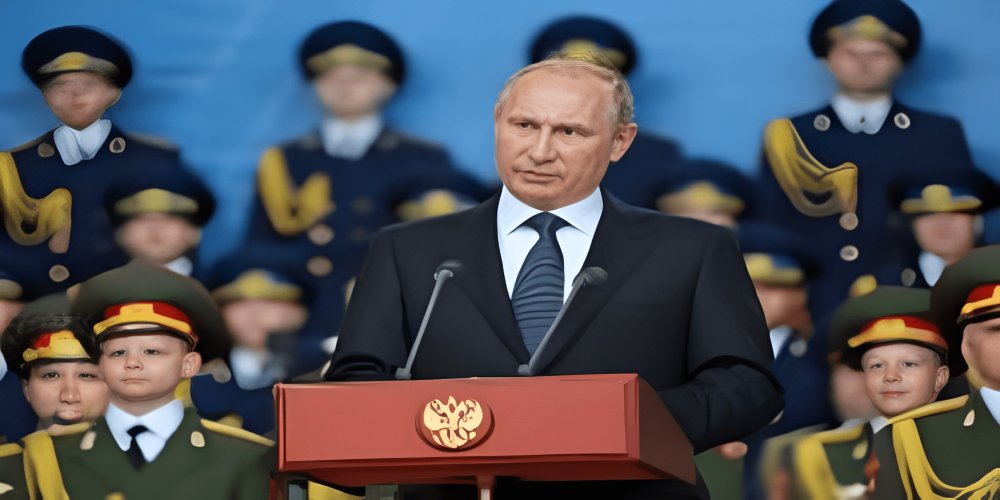
Few figures in the twenty-first century have commanded global attention quite like Vladimir Putin. Whether viewed as a stern restorer of national pride or a controversial disruptor of the post-Cold War order, the man from Leningrad has indelibly shaped not only Russia but also the geopolitical map of Europe, Asia, and the Middle East. Understanding Vladimir Putin requires moving beyond soundbites and headlines. It demands a close examination of his biographical roots, his rise through the security services, his long tenure in the Kremlin, and the fundamental philosophy that drives his decision-making. This article provides a deep, factual, and neutral exploration of Vladimir Putin, concluding with a frequently asked questions section to clarify common points of confusion.
Early Life and Formative Years
Vladimir Vladimirovich Putin was born on October 7, 1952, in Leningrad, now known as Saint Petersburg. His childhood unfolded in a shared communal apartment, a typical housing arrangement for working-class families in the post-war Soviet Union. The hardships of that era, including poverty and the lingering trauma of the Nazi siege of Leningrad, left a permanent mark on young Vladimir Putin. These early experiences taught him resilience, suspicion of chaos, and a deep respect for state authority. Unlike the flamboyant politicians of the West, Vladimir Putin developed a quiet, calculating demeanor rooted in the practical realities of Soviet life.
After completing his law degree at Leningrad State University in 1975, Vladimir Putin immediately joined the KGB, the Soviet Union’s formidable security and intelligence agency. For sixteen years, he served in various roles, including a notable posting in Dresden, East Germany, just as the Cold War was reaching its twilight. This period was critical in shaping Vladimir Putin’s worldview. He witnessed the collapse of a socialist state from within, observing how disorder and economic weakness could erase a superpower from the map. Many analysts argue that the dissolution of the USSR in 1991 was a profound trauma for Vladimir Putin, one he later described as a “major geopolitical catastrophe.” The lessons from Dresden were simple but absolute: a strong state, a cohesive security apparatus, and centralized control are non-negotiable for national survival.
The Rise to Power
The 1990s in Russia were marked by economic turmoil, oligarchic overreach, and a humiliating decline in international standing. When Vladimir Putin entered politics, first as an aide to the mayor of Saint Petersburg and later as a manager in the Kremlin under President Boris Yeltsin, he appeared to many as a competent but unremarkable bureaucrat. That perception changed dramatically in August 1999, when Yeltsin appointed Vladimir Putin as Prime Minister. Later that year, on the last day of 1999, Boris Yeltsin resigned unexpectedly, and Vladimir Putin became Acting President. By March 2000, he won the presidential election in his own right.
From the very beginning, Vladimir Putin moved to consolidate power. His first major test was the Second Chechen War, a brutal conflict that he used to project an image of decisive leadership. While Western capitals expressed concern about human rights violations, the Russian public, exhausted by the chaos of the 1990s, rallied behind Vladimir Putin. He promised stability, order, and a restoration of dignity. Within a few years, Vladimir Putin had reasserted federal control over Chechnya, sidelined the oligarchs who had defied the state, and silenced or imprisoned hostile media moguls like Vladimir Gusinsky and Boris Berezovsky.
Economic Transformation and the Oligarchs
One of Vladimir Putin’s most consequential domestic actions was his handling of Russia’s natural resources and the powerful oligarchs who had acquired state assets at bargain prices during the privatization of the 1990s. Vladimir Putin did not dismantle capitalism, but he made it clear that the state would not tolerate political interference from private wealth. The arrest and imprisonment of Mikhail Khodorkovsky, the head of the oil giant Yukos, served as a warning to all. Under Vladimir Putin, the Kremlin regained effective control over strategic energy sectors, including oil and gas. This re-nationalization provided the state with massive revenues, which Vladimir Putin used to pay down foreign debt, build up currency reserves, and eventually fund social spending.
For much of the 2000s, rising global energy prices fueled a consumption boom in Russia. Living standards improved significantly for the urban middle class, and Vladimir Putin’s approval ratings consistently hovered above sixty-five percent. Critics of Vladimir Putin argue that this prosperity was built on a fragile foundation of resource dependence and corruption. Nevertheless, the average Russian citizen felt tangible benefits: pensions were paid on time, the economy grew, and the humiliation of the 1990s seemed to fade. This economic stability, more than any ideology, cemented Vladimir Putin’s popular legitimacy.
Foreign Policy and the Resurgence of Russian Influence
On the international stage, Vladimir Putin has pursued a consistent, pragmatic, and often confrontational strategy. In his early years, he sought cooperation with the West on issues like counterterrorism and arms control. After the September 11 attacks in 2001, Vladimir Putin was the first world leader to call President George W. Bush, offering support for the U.S. military campaign in Afghanistan. However, the relationship soured over NATO expansion into former Soviet bloc countries, the U.S. withdrawal from the Anti-Ballistic Missile Treaty, and the war in Iraq. Vladimir Putin viewed these moves not as security measures but as direct encroachments on Russia’s legitimate sphere of influence.
The turning point came in a speech at the 2007 Munich Security Conference, where Vladimir Putin delivered a blistering critique of unipolar American domination. From that moment, his foreign policy took a sharper, more assertive turn. In 2008, Russian forces intervened in Georgia to support the breakaway regions of Abkhazia and South Ossetia. In 2014, following the Ukrainian Revolution of Dignity, Vladimir Putin authorized the annexation of Crimea, a move that drew widespread international condemnation and sanctions. More recently, the full-scale invasion of Ukraine in February 2022 marked the most dramatic escalation of Vladimir Putin’s confrontational foreign policy. The stated goals have included the demilitarization of Ukraine and the prevention of NATO expansion, but critics accuse Vladimir Putin of imperial revanchism.
The Man Behind the Image
Public portrayals of Vladimir Putin often oscillate between caricatures of a cold-blooded autocrat and a savvy, athletic statesman. The Kremlin has carefully cultivated a macho image for Vladimir Putin, showing him riding horses bare-chested, diving for ancient artifacts, piloting fighter jets, and scoring goals in ice hockey exhibitions. These carefully staged performances serve a specific purpose: they project vitality, control, and a distinctly masculine form of leadership. Yet those who have spent extended time with Vladimir Putin describe him as reserved, sometimes awkward in small talk, and intensely detail-oriented. He arrives late to meetings as a power play and is known for lecturing subordinates on historical minutiae.
Vladimir Putin rarely shows emotion in public, but when he speaks about the collapse of the Soviet Union or the suffering of ethnic Russians in former Soviet republics, a genuine passion emerges. This emotional core is often overlooked by Western analysts who focus on rational-actor models. For Vladimir Putin, history is not merely a backdrop but a battlefield. He has written academic articles on Russian unity, sponsored massive historical parks like Patriot Park, and reintroduced Soviet symbols into military ceremonies. His Russia is not a pet project of liberal reform but rather the heir to the tsars and the commissars alike.
Challenges and Criticisms
No assessment of Vladimir Putin would be complete without acknowledging the serious criticisms of his rule. Independent observers and international bodies have documented a pattern of political repression under Vladimir Putin: the assassination of journalists like Anna Politkovskaya, the poisoning of opposition figures such as Alexei Navalny, and the jailing of protesters. Human rights organizations claim that Vladimir Putin has overseen the effective dismantling of civil society, replacing it with state-controlled organizations that co-opt dissent. The legal system, once undergoing reform, has become a tool of executive power under Vladimir Putin. Furthermore, endemic corruption has reached such levels that some economists estimate that nearly a third of Russia’s GDP flows through shadow networks connected to the ruling elite.
Western governments have imposed multiple rounds of sanctions targeting individuals close to Vladimir Putin, as well as entire sectors of the Russian economy. These sanctions have limited Russian access to financial markets, frozen assets, and restricted technology transfers. In response, Vladimir Putin has promoted import substitution, strengthened ties with China, and reframed sanctions as a badge of patriotic honor. Despite economic difficulties, including inflation and labor shortages, Vladimir Putin retains a solid base of support among older Russians, state employees, and nationalist-minded citizens who see him as a bulwark against Western decadence.
The Future Without Vladimir Putin
One of the most debated questions among political scientists is what will happen after Vladimir Putin leaves power. Russia has no clear succession mechanism. The constitution has been amended to reset presidential term limits, allowing Vladimir Putin to run again. If he serves those terms, he could remain in the Kremlin until 2036. This long horizon suggests that Vladimir Putin intends to shape Russia’s trajectory for many years to come. However, no leader is immortal. The system Vladimir Putin has built is hyper-centralized and dependent on personal loyalty. In its current form, it is unclear whether the political machine can survive its creator.
A post-Putin Russia could face a struggle among rival factions from the security services, the energy lobby, and the technocratic elite. Without Vladimir Putin’s personal authority, those factions might turn against each other. For the world, the transition could be perilous. A weak or chaotic Russia might increase the risk of nuclear proliferation, militant insurgencies, or refugee flows. Conversely, a more moderate successor might seek to repair relations with the West. The one certainty is that the absence of Vladimir Putin will leave a void that has been decades in the making.
Frequently Asked Questions About Vladimir Putin
This section addresses the most common queries regarding Vladimir Putin, providing clear, factual answers without editorializing.
1. How long has Vladimir Putin been in power?
Vladimir Putin has been the dominant leader of Russia since 1999. He served as President from 2000 to 2008. Due to constitutional term limits, he then became Prime Minister from 2008 to 2012, while Dmitry Medvedev served as a placeholder President. During those four years, Vladimir Putin remained the de facto decision-maker. He returned to the presidency in 2012 and has been re-elected since. Therefore, Vladimir Putin has effectively governed Russia for over twenty-five years, either directly or through proxy.
2. What is Vladimir Putin’s net worth?
Estimates vary wildly because Vladimir Putin has never publicly disclosed his personal wealth. Official financial declarations show a modest apartment, a few cars, and a state salary. However, leaked documents and investigations by opposition figures like the late Alexei Navalny suggest that Vladimir Putin has access to enormous hidden assets, including yachts, palaces, and estates. The most credible non-governmental estimates place the hidden wealth of Vladimir Putin as high as two hundred billion dollars. It is important to note that these figures are extrapolations, not proven facts.
3. Why does Vladimir Putin oppose NATO expansion?
Vladimir Putin has consistently argued that NATO expansion violates informal assurances given to Soviet leaders at the time of German reunification. He views each new NATO member as a direct military threat to Russian borders. From the perspective of Vladimir Putin, the alliance’s presence in Romania, Poland, and the Baltic states breaks a promise and reduces Russia’s strategic depth. He has also claimed that the United States uses NATO to contain Russia, regardless of the alliance’s official defensive posture.
4. Does Vladimir Putin plan to restore the Soviet Union?
Vladimir Putin has publicly stated that he considers the collapse of the USSR a tragedy, but he has not called for an outright restoration of the Soviet Union. Instead, he has pursued alternative integration projects, such as the Eurasian Economic Union. However, his actions in Crimea, eastern Ukraine, and his rhetoric about “historical Russian lands” suggest a desire to reverse what he sees as the unjust fragmentation of the Russian world. Analysts disagree on whether Vladimir Putin dreams of a full Soviet restoration or simply a sphere of influence where Russia can veto the policies of its neighbors.
5. How is Vladimir Putin’s health?
This is a recurring topic of speculation. Rumors about Vladimir Putin having cancer, Parkinson’s disease, or other ailments have circulated for years, often based on video analysis of his gait or gestures. The Kremlin consistently denies these claims, showing Vladimir Putin engaged in physically demanding activities like judo and skiing. No independent verification of his health records exists. Skeptics argue that the health rumors are a form of wishful thinking by opponents. Realistically, Vladimir Putin appears to be active and coherent, though the full extent of his medical history remains a state secret.
6. What is the official title of Vladimir Putin?
As of the time of this writing, Vladimir Putin is the President of the Russian Federation. He also holds the position of Supreme Commander-in-Chief of the Russian Armed Forces. Before becoming president, his titles included Prime Minister, Director of the Federal Security Service, and Deputy Mayor of Saint Petersburg.
7. What languages does Vladimir Putin speak?
Vladimir Putin is a native Russian speaker. He studied German extensively during his KGB service in Dresden and speaks it with reasonable fluency. His English is functional but not fluent; he typically uses interpreters for sensitive diplomatic negotiations. He has been known to understand English during meetings with Western leaders but chooses to respond in Russian to avoid nuance errors.
8. How popular is Vladimir Putin inside Russia?
Domestic approval ratings for Vladimir Putin have traditionally been very high, often exceeding seventy or even eighty percent. However, these numbers must be interpreted carefully. Russia has limited independent polling, and state-controlled media dominates the information landscape. Nevertheless, even foreign polling agencies have found substantial genuine support for Vladimir Putin, particularly among older generations, rural populations, and patriots who credit him with stabilizing the country. The invasion of Ukraine has shifted some opinions, but as of the latest data, Vladimir Putin remains more popular than any alternative figure in Russian politics.
9. What is the ideology of Vladimir Putin?
Vladimir Putin does not subscribe to a formal ideology like Marxism or classical liberalism. Instead, he advocates a flexible ideology often called “Putinism.” Key components include Russian exceptionalism, a strong centralized state, conservative social values, opposition to Western liberal interventionism, and a belief in a multipolar world order. Vladimir Putin has promoted traditional Orthodox Christian values as a counterweight to what he calls Western moral decline. Pragmatism, however, always trumps dogma in his decision-making.
10. Can Vladimir Putin be arrested by the International Criminal Court?
The International Criminal Court issued an arrest warrant for Vladimir Putin in March 2023, charging him with the war crime of unlawful deportation of children from Ukraine. As a result, Vladimir Putin faces potential arrest if he travels to any of the one hundred twenty-four ICC member states that recognize the court’s jurisdiction. However, major powers like China, the United States, and India are not ICC parties. Furthermore, the ICC has no police force of its own, so enforcement depends entirely on the cooperation of host countries. Practically, Vladimir Putin has limited his foreign travel to nations that will not enforce the warrant, such as China and several Central Asian republics.
Conclusion
Vladimir Putin remains one of the most consequential and polarizing leaders of the modern era. His life story mirrors the trajectory of Russia itself: from the ruins of a collapsed superpower to an assertive, centralized state that challenges the Western-led order. Supporters of Vladimir Putin credit him with saving Russia from disintegration and restoring a sense of national purpose. Detractors point to authoritarian governance, international aggression, and systemic corruption. What cannot be denied is that Vladimir Putin has reshaped the rules of global politics, forced a rethinking of European security, and left a legacy that will outlast his time in office. Understanding Vladimir Putin is not about agreeing or disagreeing with him. It is about comprehending the forces of history, security, and identity that continue to drive the world’s largest nation.
Leave A Comment
0 Comment