
The financial world rarely offers clear-cut heroes or villains. Instead, it provides narratives. And few figures in modern finance command a narrative as powerful as Cathie Wood, the founder and CEO of Ark Invest. When news breaks of a significant cathie wood shopify stock purchase, it does not merely register as a routine transaction. It becomes a signal, a piece of data that thousands of retail investors and institutional observers dissect for meaning. In early 2023 and continuing through 2024, Wood’s firm made a series of aggressive moves into Shopify Inc., a Canadian e-commerce giant that had seen better days. This article unpacks the context, the strategy, and the potential implications of that decision, offering a comprehensive look at why one of the most controversial money managers of the decade decided to double down on a company many had already written off.
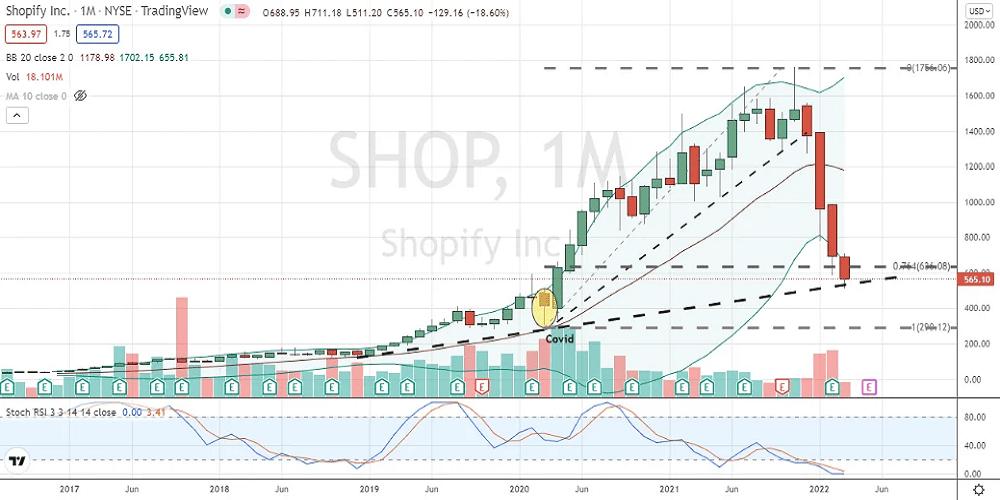
To understand the weight of the cathie wood shopify stock purchase, one must first understand the landscape of late 2022 and early 2023. The technology sector was in a state of post-pandemic recalibration. E-commerce stocks, which had soared on the back of lockdowns and contactless shopping, were plummeting. Shopify, in particular, was a casualty of its own success. Having grown too fast during the pandemic, the company found itself bloated, overstaffed, and facing a new reality where consumers were returning to physical stores. The stock had collapsed nearly 80% from its all-time high. Sentiment was brutal. Analysts called it a pandemic relic. Then came Cathie Wood.
Wood’s approach is not obscure. She invests in what she calls “disruptive innovation.” Her firm’s flagship funds—ARKK, ARKW, and ARKF—target companies that are developing technologies like artificial intelligence, blockchain, genomic sequencing, and, crucially, digital wallets and e-commerce enablement. The cathie wood shopify stock purchase fit squarely into the latter category. But why now? Why at a moment when interest rates were rising and growth stocks were being punished mercilessly? The answer, according to Wood’s public commentary, lies in a concept called “creative destruction.” She argued that the market was punishing the innocent alongside the guilty. Shopify, she believed, had not broken its model. It had merely overstaffed. The core thesis—that independent retail would need a robust, democratized operating system—remained intact.
The mechanics of the purchase are also telling. Ark Invest does not make sporadic bets. It manages its portfolio through daily trading logs, which are publicly available. Observers noticed a pattern. On multiple days in May and June 2023, Ark’s funds scooped up hundreds of thousands of shares of Shopify. At the time, the stock was trading in the range of forty to fifty dollars per share, a fraction of its peak near one hundred and seventy dollars. This was not a single cathie wood shopify stock purchase but a sustained campaign. Wood was averaging down, a technique that often invites criticism. Skeptics argue that averaging down is just throwing good money after bad. Wood counters that volatility is the price of admission for exponential returns.
What did Ark Invest see that others missed? To answer that, one must look at Shopify’s pivot. In 2023, the company executed a massive restructuring, cutting twenty percent of its workforce and selling its logistics arm to Flexport. The market initially reacted with confusion, but the logic was sound. Shopify was returning to its roots: software and payments. The company realized that competing directly with Amazon on fulfillment was a capital-intensive war it could not win. Instead, it refocused on its merchant operating system, particularly Shop Pay, its one-tap checkout solution. For Wood, this is the gem. Shop Pay is not just a payment processor; it is a data-rich, user-friendly network that rivals PayPal and Block. In the cathie wood shopify stock purchase thesis, Shop Pay becomes the default wallet for the independent internet, and as more merchants use Shopify, the network effects compound.
Another layer to the cathie wood shopify stock purchase is the broader macroeconomic stance of Cathie Wood. She is famously a deflationist. While the Federal Reserve was raising rates to fight inflation, Wood argued that the central bank was misreading the signals. She pointed to falling commodity prices, declining used car prices, and technological deflation—the tendency of technology to drive down costs over time. If Wood is correct, and interest rates begin to fall, the discounted cash flow models used to value growth stocks become far more generous. A company like Shopify, which generates positive free cash flow, would see its present value rise significantly. Therefore, the cathie wood shopify stock purchase is not just a bet on e-commerce; it is a bet on the direction of interest rates and the accuracy of the Fed’s policy.
However, no discussion of a cathie wood shopify stock purchase would be complete without addressing the controversy. Critics have a field day with Wood’s timing. In 2021, Ark Invest was the best-performing large fund on the planet. In 2022, it was one of the worst. Detractors argue that Wood has a blind spot for valuation, that she buys falling knives without regard for price. They point to her purchases of stocks like Zoom and Teladoc, which remain far below their peaks. Regarding Shopify, the bear case is straightforward. Competition is fierce. Amazon continues to encroach on third-party sellers. Walmart is building its own marketplace. Additionally, consumer spending could weaken further if a recession hits. Shopify’s merchants are small and medium-sized businesses, the very entities most vulnerable to a credit crunch. If those merchants fail, they stop paying subscription fees, and they stop processing transactions. The cathie wood shopify stock purchase would then look premature.
Despite the risks, Wood has doubled down repeatedly. In the fourth quarter of 2023, after Shopify reported better-than-expected results, including a surprising return to revenue acceleration, Ark added more shares. By early 2024, Ark Invest had become one of the largest institutional holders of Shopify, owning millions of shares across several funds. This commitment transforms the cathie wood shopify stock purchase from a speculative trade into a conviction holding. Wood has publicly stated that she expects Shopify to compound at a twenty percent annual rate over the next five years. That is a bold claim for a company that operates in a mature sector.
Let us analyze the specific dates and volumes. While Ark’s trades are disclosed daily, the most notable accumulation occurred in the aftermath of Shopify’s first-quarter 2023 earnings call, where the company announced its asset sale. The stock gapped down over fifteen percent. That very day, Ark purchased over three hundred thousand shares across its funds. This pattern is classic Wood: buying on extreme weakness when the company is fundamentally restructuring. She has referred to such moments as “paradigm shifts” where the market misprices long-term optionality. The cathie wood shopify stock purchase was not a secret; it was a public declaration that the floor had arrived.
From a portfolio construction perspective, Shopify has become a top five holding in ARKW, the Next Generation Internet ETF. This means that Wood is not just dabbling. She is consciously making Shopify a central pillar of her internet thesis. The portfolio also holds positions in Coinbase, Roku, and Block. The connection between these names is the digitization of commerce and finance. Shop Pay integrates with Bitcoin, and while Shopify itself is not a crypto company, its flexible infrastructure allows merchants to accept digital currencies. Wood sees a future where every transaction is tokenized and every small business runs on a unified operating system. In that future, Shopify is the operating system, and Shop Pay is the payment rail.
The reaction from the retail investing community to the cathie wood shopify stock purchase has been predictably polarized. On Reddit’s r/stocks and r/investing, users argue in endless threads about whether Wood is a genius or a charlatan. Some call her a visionary for seeing past short-term earnings volatility. Others mock her as a reverse indicator, noting that stocks often continue to fall after she buys them. The truth, as always, lies somewhere in the muddled middle. Wood’s time horizon is five years. Most retail traders think in five weeks or five days. The dissonance between her horizon and the market’s impatience creates the controversy.
One must also consider the role of active versus passive management. Wood is one of the few remaining high-profile active managers. The cathie wood shopify stock purchase is a direct challenge to the efficient market hypothesis. Wood is essentially saying that the collective wisdom of the market—which has assigned a lower valuation to Shopify—is wrong. She is betting that her research on network effects, total addressable market, and the durability of the software subscription model is superior to the consensus. That takes conviction. It also takes a willingness to be humiliated in the short term. She has been humiliated before, and she is still standing.
Financial advisors often caution against following Wood into individual stocks. They note that Ark’s funds are concentrated and volatile. A single cathie wood shopify stock purchase should not inspire an individual investor to mortgage their home to buy shares. Instead, the value of watching Wood is not imitation but education. Her thesis forces you to think about where the world is going, not where it has been. Are we truly moving to a creator economy where small businesses bypass traditional retail? Will digital wallets replace credit cards? Is inflation really transitory? These are the questions behind the transaction.
Looking ahead, the performance of the cathie wood shopify stock purchase will depend on two variables. The first is execution. Shopify’s management, led by CEO Tobias Lütke, must prove that they can grow subscription revenue without the heavy costs of logistics. The early signs are positive. Gross merchandise volume has remained resilient, and international expansion is gaining traction. The second variable is the macro environment. If the Fed cuts rates in 2024 or 2025, growth stocks like Shopify will likely re-rate higher. If rates stay high, the multiple compression will continue. Wood is betting on the former.
The purchase also has a psychological component. When a prominent fund manager like Cathie Wood buys a stock, she is sending a message to the company’s management: “We support your vision. Do not waver.” It is a form of patient capital. In a world of hedge funds that demand quarterly earnings beats, Wood’s capital is different. She is willing to wait through the restructuring pain. That is valuable to a CEO like Lütke, who needs to make long-term product decisions without worrying about the next earnings call. In that sense, the cathie wood shopify stock purchase is not just a financial instrument; it is a partnership.
To put the numbers in perspective, as of mid-2024, Ark Invest holds roughly nine million shares of Shopify, valued at over four hundred million dollars. The average purchase price is estimated to be around fifty-two dollars per share. At the time of this writing, Shopify trades above seventy dollars, meaning the position is profitable on paper. However, Wood has shown no inclination to sell. She adds on dips and holds through peaks. This contrasts sharply with her trading in other names, like Tesla, where she has famously taken profits at opportune moments. With Shopify, the behavior suggests a long-term accumulation strategy rather than a tactical trade.
The e-commerce landscape continues to evolve. New entrants like TikTok Shop are creating impulse purchase channels. Legacy players like Ebay are struggling for relevance. In this chaotic environment, Shopify’s value proposition—a simple, integrated platform for selling anywhere—becomes more appealing. The cathie wood shopify stock purchase is a recognition that the operating system layer of e-commerce tends to consolidate around one or two winners. Shopify is the clear leader in its segment. WooCommerce and BigCommerce remain distant rivals. By placing this bet, Wood is not just buying a stock; she is buying a structural position in the future of commerce.
Now, let us address the skeptics directly. They argue that the cathie wood shopify stock purchase is a classic example of a narrative stock. The story sounds good, but the financials do not justify the valuation. Shopify trades at a high multiple of earnings, even after the crash. To justify the current price, Shopify must grow revenue at twenty percent annually for the next decade. That is possible, but not guaranteed. Moreover, the company faces an existential threat from larger ecosystem players. Amazon’s “Buy with Prime” feature allows merchants to use Amazon’s fulfillment while keeping their own checkout. That attacks Shopify directly. Wood would respond that competition always exists, but the best platform wins. She believes Shopify’s developer ecosystem and ease of use are unassailable moats.
For the retail investor, the lesson of the cathie wood shopify stock purchase is not to copy the trade blindly. The lesson is to understand the rationale and then conduct your own research. Ask yourself: Do you believe that independent retail will grow faster than GDP? Do you believe that software margins can remain high? Do you believe that Cathie Wood is right about interest rates? If you answer yes to two of these questions, the purchase might make sense. If you answer no, you should stay away. The worst thing an investor can do is buy a stock simply because a famous person bought it without understanding the underlying thesis.
In conclusion, the cathie wood shopify stock purchase is a fascinating case study in contrarian investing. It defied the consensus, embraced volatility, and staked a claim on a controversial future. Whether it proves to be a brilliant call or a costly error will not be known for years. What is clear today is that Cathie Wood has placed a sizable bet on the idea that the small business revolution is just beginning. She has bet that Shopify is its engine. And she has bet that the market’s fear is her opportunity. For anyone interested in the intersection of technology, finance, and human behavior, this purchase is worth more than a glance. It is worth a deep, skeptical, and open-minded analysis.
Frequently Asked Questions
1. Why did Cathie Wood buy Shopify stock when it was falling?
Cathie Wood and Ark Invest typically buy during periods of market panic or price dislocation. She refers to this as “buying the fear.” The cathie wood shopify stock purchase occurred after the stock had fallen roughly eighty percent from its peak. Wood believed the market was overreacting to Shopify’s post-pandemic restructuring and that the core business model—software and payments—remained robust.
2. How many shares of Shopify does Ark Invest own exactly?
As of the most recent publicly available filings from mid-2024, Ark Invest holds approximately nine million shares of Shopify across its various ETFs, including ARKK, ARKW, and ARKF. The exact number changes daily because Ark publishes its trades each day, but the position is consistently one of the fund’s largest holdings.
3. Is the cathie wood shopify stock purchase profitable right now?
Based on estimated average purchase prices around fifty-two dollars per share, and considering Shopify’s trading range in the seventies to low eighties, the position is currently in positive territory. However, Ark has held shares purchased at varying price points, including some higher levels, so profitability per share varies. Wood has not sold significant amounts, indicating she expects further upside.
4. Should I copy Cathie Wood and buy Shopify stock?
No financial advisor would recommend blindly copying any single manager’s trade. The cathie wood shopify stock purchase should be viewed as a piece of information, not a directive. Before buying Shopify, you should assess your own risk tolerance, time horizon, and independent research. Wood’s funds are high-volatility strategies that can lose significant value in short periods.
5. What is the main risk of the cathie wood shopify stock purchase?
The primary risk is persistent high interest rates, which compress valuations for growth stocks. A secondary risk is increased competition, particularly from Amazon’s “Buy with Prime” and other checkout solutions. A third risk is a severe economic recession that forces Shopify’s small business merchants to close, reducing both subscription revenue and payment volume.
6. Does Cathie Wood own Shopify in all of her Ark funds?
No. Shopify appears most prominently in the Ark Next Generation Internet ETF (ARKW) and the Ark Innovation ETF (ARKK). It also has a smaller presence in the Ark Fintech Innovation ETF (ARKF). It is not typically held in the Ark Genomic Revolution ETF (ARKG) or the Ark Autonomous Technology & Robotics ETF (ARKQ), as those funds focus on different innovation themes.
7. How does the cathie wood shopify stock purchase fit into her broader investment thesis?
Wood’s thesis revolves around five innovation platforms: AI, robotics, energy storage, genomic sequencing, and blockchain. Shopify fits into the digital wallet and e-commerce enablement sub-theme. She sees Shop Pay as a potential dominant digital wallet, and Shopify’s operating system as essential infrastructure for the creator economy.
8. What price target does Cathie Wood have for Shopify?
Ark Invest does not always publish explicit price targets, but Wood has made public statements suggesting she expects Shopify to compound at an annual rate of twenty percent or more over the next five years. This implies a price target well above one hundred dollars per share, though such projections are highly speculative and depend on interest rates and revenue growth.
9. When did the first major cathie wood shopify stock purchase occur?
Ark Invest first accumulated a meaningful position in Shopify in late 2022, but the most aggressive phase of buying occurred in May and June of 2023, immediately following Shopify’s announcement that it was selling its logistics division and cutting twenty percent of its workforce. Wood saw that as a clarifying moment for the company’s focus.
10. Is this purchase a sign that Cathie Wood believes e-commerce is about to have a second boom?
Not exactly a boom, but a maturation. Wood believes the pandemic pulled forward e-commerce adoption, and the pullback was an overcorrection. The cathie wood shopify stock purchase signals her belief that e-commerce will continue to gain market share from physical retail over the long term, but at a steadier, more profitable pace than the pandemic spike suggested.
Leave A Comment
0 Comment