
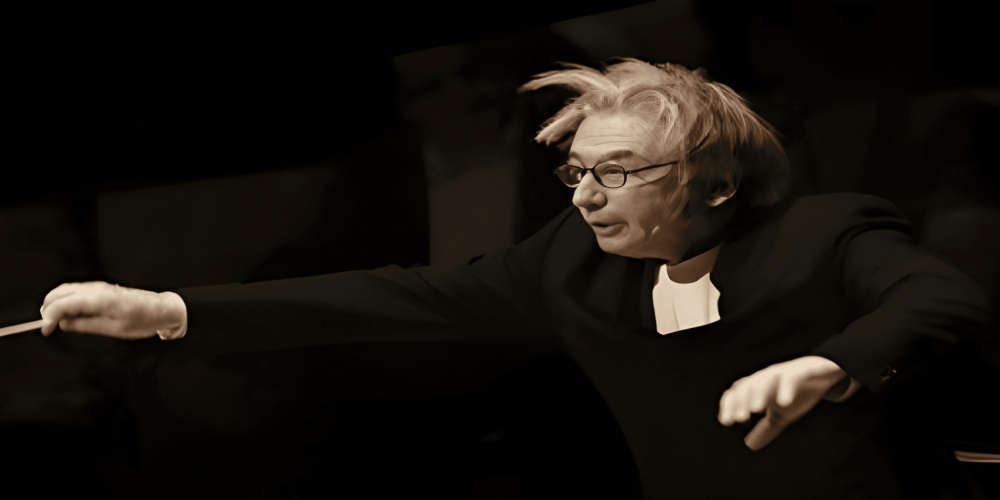
On April 22, 2026, the classical music world fell silent. Michael Tilson Thomas, the American conductor, composer, pianist, and educator whose career spanned more than half a century, died at his home in San Francisco. He was 81 years old. The cause was glioblastoma, an aggressive form of brain cancer with which he had been diagnosed in 2021. His passing marks the end of an era in orchestral music, yet his influence resonates far beyond the concert halls he once commanded.
Michael Tilson Thomas was not merely a conductor. He was a bridge between musical worlds, a curator of the American maverick spirit, and a tireless educator who believed that orchestras could speak to everyone, not just elite subscribers. From his explosive, unscheduled New York debut at age 24 to his transformative twenty-five-year reign with the San Francisco Symphony, Tilson Thomas—known affectionately by his initials, MTT—redefined what it meant to stand on a podium. He brought the swagger of Leonard Bernstein, whom he called his mentor, the intellectual rigor of Pierre Boulez, and the theatrical flair of his Yiddish theatre grandparents. This article explores the life, legacy, and lasting lessons of Michael Tilson Thomas, a man who insisted that a symphony orchestra could be as daring as a rock band and as intimate as a chamber group.
Early Life and the Unlikely Scientist
Understanding Michael Tilson Thomas requires looking at the unique soil from which he grew. Born in Los Angeles on December 21, 1944, he was surrounded by performance art from his first breath. His grandparents, Boris and Bessie Thomashefsky, were titans of the American Yiddish theatre, pioneers who brought Eastern European drama to the immigrant communities of New York. His father, Ted Thomas, worked as a producer for Orson Welles’ Mercury Theater before moving into Hollywood film and television. His mother, Roberta, was a research executive at Columbia Pictures. This was a household where storytelling was the currency of daily life.
However, the young Michael did not initially rush toward the baton. For a surprising portion of his adolescence, he was fixated on science. He entered the University of Southern California with plans to become a scientist, studying mineralogy, crystallography, and later biochemistry. “If I had not accomplished anything by the time I was 20 I would go back to science,” he recalled in a 1971 interview. The pivot came at age eighteen. Despite witnessing the bitterness and burnout of many professional musicians, a genetic or perhaps spiritual pull proved too strong to resist. He changed his major to music, but he never lost the scientific curiosity. That analytical mind would later make him one of the most lucid explicators of complex scores like those of Gustav Mahler and Charles Ives.
At USC, Tilson Thomas found his musical north stars. He studied piano with John Crown, a pupil of the legendary Rosenthal, and composition and conducting with Ingolf Dahl. Dahl, a German emigre and protégé of Stravinsky, taught him not just the mechanics of music but the architecture of listening. He also placed himself in the orbit of the greats. As a teenager, he worked closely with Igor Stravinsky, Aaron Copland, Karlheinz Stockhausen, and Pierre Boulez. By the time he graduated in 1967, he was thoroughly modern in his outlook but grounded in the European tradition.
The Debut That Changed Everything
The mythology of Michael Tilson Thomas begins in earnest on October 22, 1969, at New York’s Philharmonic Hall (now David Geffen Hall). At twenty-four, he was the Boston Symphony Orchestra’s assistant conductor. On that fateful evening, the scheduled conductor, William Steinberg, fell ill mid-concert. With the orchestra already on stage and the audience waiting, a desperate stage manager found Tilson Thomas in the wings. The story goes that Steinberg pointed at the lanky young man and said, "You. Put your suit on. You’re going to conduct."
Without rehearsal, without nerves, Tilson Thomas walked onto the Lincoln Center stage and led Robert Starer’s Concerto for Violin, Cello and Orchestra followed by Richard Strauss’s notoriously tricky “Till Eulenspiegel.” The next morning, Harold C. Schonberg of The New York Times, a critic not known for hyperbole, wrote: “A tall, thin young man, he came on stage with an air of immense confidence and authority, and showed that his confidence was not misplaced.” Overnight, the unknown assistant became the future of American conducting.
The Bernstein Connection and the Bad Boy Image
It was impossible to look at the young Michael Tilson Thomas and not see echoes of Leonard Bernstein. Both were tall, handsome, media-savvy Jewish men from Los Angeles who exuded electricity on the podium. Tilson Thomas first encountered Bernstein at Tanglewood in 1968, and the older man immediately took him under his wing. Bernstein’s assessment was characteristically dramatic but prescient: “I don’t fling the word genius around lightly, but I fling it around about Michael. He reminds me of me at that age, except that he knows more than I did” .
Yet Tilson Thomas was determined to be more than a mimic. While Bernstein eventually leaned into the weight of the Austro-German canon, Tilson Thomas embraced the messy, vibrant, and distinctly American experimental tradition. He programmed Ives, Cage, and Carl Ruggles with the same reverence normally reserved for Beethoven.
This earned him a reputation as a rebel. In 1973, he nearly caused a riot at Carnegie Hall when he led Steve Reich’s “Four Organs.” The piece—featuring four electronic organs playing a single chord for seventeen minutes—prompted audience members to shout, “Stop! Stop!” But Tilson Thomas held his ground, believing that the younger generation would intuitively understand the minimalist pulse even if their parents did not. He summarized his philosophy succinctly in a 1971 interview: “Young people are not interested in stock performances of the standard repertory. Neither am I. I hope every performance I hear or conduct will be different from the last” .
Building Institutions: Buffalo, New World, and London
The 1970s and 1980s were a period of intense growth and occasional turbulence for Tilson Thomas. As Music Director of the Buffalo Philharmonic from 1971 to 1979, he programmed challenging contemporary works that strained relationships with conservative board members and musicians. He later admitted these years were personally testing, and a 1978 drug bust at Kennedy Airport (later plea-bargained down) did little to help his image. He resigned, but he refused to fade away.
Instead, he pivoted to creation. In 1987, alongside philanthropist Ted Arison, he co-founded the New World Symphony in Miami Beach. This was a radical concept: a training orchestra specifically designed as a “research-and-development arm for classical music.” Unlike a conservatory, the New World Symphony was a fellowship program that gave graduates their first real taste of professional life. For thirty-four years, Tilson Thomas shaped this institution, focusing not just on technical perfection but on how musicians could be “contributors to the society from which they’re coming” .
Simultaneously, he was making waves in Europe. As Principal Conductor of the London Symphony Orchestra from 1988 to 1995, he shed his "enfant terrible" skin and proved he could handle the core repertoire with sophistication. He helped drag the LSO into the modern era, increasing their discipline while showcasing his affinity for Russian and American music.
The San Francisco Glory Years
If there is a single chapter of his career that defines Michael Tilson Thomas, it is his tenure with the San Francisco Symphony (SFS) from 1995 to 2020. When he arrived, the orchestra was excellent under Herbert Blomstedt, but perhaps a bit reserved. MTT unleashed the orchestra’s personality. Over twenty-five years, he led more than 1,800 concerts, expanded the orchestra’s touring profile, and shattered attendance records.
He also turned Davies Hall into a laboratory for "maverick" music. In his very first season, he launched the “American Mavericks” festival. The defining moment of that era came when Tilson Thomas invited members of the Grateful Dead—specifically bassist Phil Lesh, a former student of Luciano Berio—to perform John Cage’s “Renga” with the orchestra. The concert hall was flooded with Deadheads, young people who had never stepped foot in a symphony hall. Alex Ross of The New York Times wrote in 1996 that Tilson Thomas had “managed a difficult balancing act, engaging a new audience without abandoning his own musical principles” .
Beyond the spectacle, MTT’s greatest gift to San Francisco was Mahler. He embarked on a monumental project to record the complete Mahler cycle on the SFS Media label. These recordings were not just performances; they were events, often filmed for PBS’s “Keeping Score” series, where Tilson Thomas would sit at a piano and explain Mahler’s psychological complexities in plain English. He demystified the composer who once terrified audiences, turning Mahler into a stadium-filling name in the Bay Area.
His final years with the orchestra were marked by a heartbreaking dignity. Diagnosed with glioblastoma in 2021, he underwent five-hour brain surgery and chemotherapy. Against all odds, he returned to the podium. When the tumor returned in February 2025, he announced his retirement. He conducted his final concert in April 2025—a birthday celebration of Beethoven’s Ninth. In a statement, he referenced a musical term: “At that point we all get to say the old show business expression, ‘It’s a wrap.’ A coda is a musical element... My life’s coda is generous and rich” .
Personal Life and Advocacy
Michael Tilson Thomas was one of the first major openly gay conductors in the world. He met his husband, Joshua Robison, in the orchestra of North Hollywood Junior High School. They became partners in 1976 and legally married in 2014. Josh, a classical musician and painter, was his anchor. Robison died just two months before Tilson Thomas, on February 22, 2026, following a fall.
Throughout his illness, Tilson Thomas was cared for by friends and family, including his longtime publicist Connie Shuman. He leaves behind no children, but he leaves behind thousands of musicians who passed through the New World Symphony and the SFS who consider him a mentor.
Frequently Asked Questions about Michael Tilson Thomas
Q1: What was Michael Tilson Thomas’s cause of death?
Michael Tilson Thomas died on April 22, 2026, at the age of 81. The cause of death was glioblastoma multiforme, an aggressive form of brain cancer. He had been diagnosed in 2021, underwent surgery and treatment, and announced the tumor’s return in February 2025.
Q2: How many Grammy Awards did Michael Tilson Thomas win?
Michael Tilson Thomas was a remarkably decorated recording artist. Over his career, he received 39 Grammy Award nominations and won 12 Grammy Awards. This placed him among the most honored conductors in the history of the awards.
Q3: Why was Michael Tilson Thomas compared to Leonard Bernstein?
The comparison was inevitable due to their shared background. Both were charismatic, media-friendly conductors from Los Angeles of Jewish heritage. Bernstein was a direct mentor to Tilson Thomas. However, while Bernstein is remembered for his Brahms and Beethoven, Tilson Thomas carved his own path as a specialist in American experimental music, including composers like Charles Ives, John Cage, and Steve Reich.
Q4: What was the New World Symphony?
The New World Symphony (NWS) is an orchestral academy founded in 1987 by Michael Tilson Thomas and Ted Arison in Miami Beach, Florida. Unlike a traditional conservatory, it is a fellowship program designed specifically to prepare gifted young musicians for leadership roles in professional orchestras. Tilson Thomas served as its Artistic Director for 34 years, from 1987 until 2021.
Q5: What was Michael Tilson Thomas’s connection to the Grateful Dead?
Michael Tilson Thomas had a well-publicized crossover with the rock band the Grateful Dead during his first season as music director of the San Francisco Symphony in 1996. Four surviving members of the Grateful Dead joined the orchestra to perform John Cage’s “Renga” at a festival curated by Tilson Thomas. The collaboration was a deliberate effort to bring the symphony to younger audiences, specifically the “Deadhead” counterculture.
Q6: Was Michael Tilson Thomas a composer?
Yes. While best known as a conductor and interpreter, Michael Tilson Thomas was also a respected composer. His works include “Grace” (1988), “From the Diary of Anne Frank” (a UNICEF commission narrated by Audrey Hepburn), “Four Preludes on Playthings of the Wind” (2015-16), and “Meditations on Rilke” (2019).
Q7: What is Michael Tilson Thomas’s legacy in San Francisco?
His legacy is transformative. As the 11th Music Director of the San Francisco Symphony from 1995 to 2020, he is credited with turning the orchestra into a world-class international powerhouse. He built a new concert hall (Davies Symphony Hall) into a media hub, recorded a legendary complete cycle of Mahler symphonies, and pioneered innovative multimedia educational programs like “Keeping Score.” San Francisco Mayor Daniel Lurie stated that Tilson Thomas “helped shape our entire city’s cultural identity” .
Conclusion: The Music That Remains
Michael Tilson Thomas once asked the graduating class at Juilliard: “What’s left when the music stops, when the curtain falls and the lights go off? What do people take away with them?” In his later years, he suggested that music’s role might shift from shaking people up to providing an oasis of peace in a chaotic world.
The answer to his own question lies in the institutions he built and the recordings he left. The New World Symphony still plays in Miami. The San Francisco Symphony still plays with the swagger he instilled. Young conductors still study his recordings of Ives and Mahler. He proved that a conductor could be intellectually rigorous without being cold, and emotionally expressive without being sentimental.
Michael Tilson Thomas was the last of a certain kind of American musician—one who knew Stravinsky personally, who could conduct Stockhausen in the morning and Gershwin in the afternoon, who could speak to a blue-haired subscriber and a Deadhead with equal respect. He was, as Bernstein said, a genius. But more than that, he was a generous one.
Leave A Comment
0 Comment