
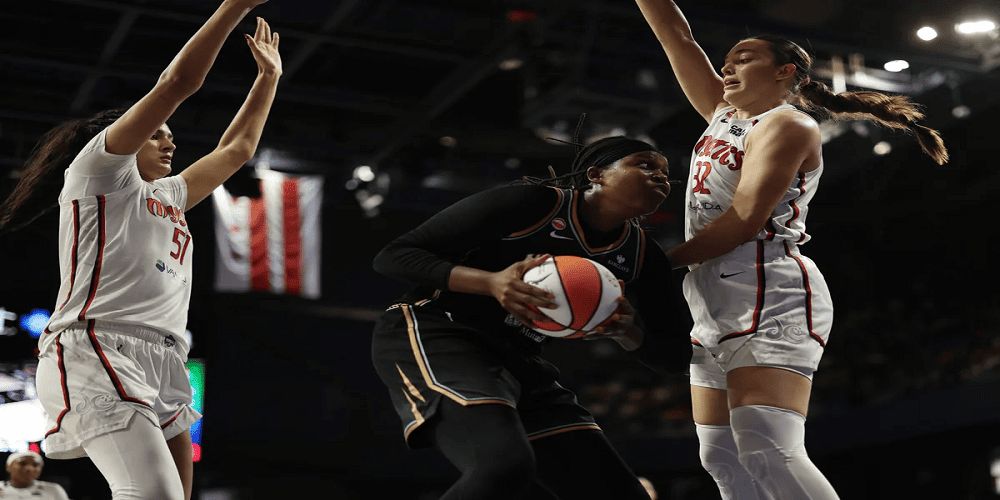
The landscape of women’s professional basketball has been shaped by dynasties, rivalries, and moments of individual brilliance. Among the most compelling debates among fans and analysts is the comparison between the New York Liberty and the Portland Fire. While the Liberty is an original WNBA franchise with a deep, storied history, the Portland Fire existed for only three seasons before disbanding. Yet, the discussion of liberty vs portland fire remains relevant for historians of the sport, evaluators of team building, and those curious about what makes a franchise sustainable versus one that burns out quickly. This article provides a detailed, neutral analysis of both teams, focusing on their origins, performance, iconic players, cultural impact, and the lessons drawn from their very different trajectories.
Origins and Historical Context
The New York Liberty was one of the eight founding franchises of the WNBA in 1997. The league launched with significant backing from the NBA, and New York, as a major media market, was a natural choice. The Liberty played their home games at Madison Square Garden, instantly giving them prestige and visibility. From day one, the Liberty was positioned as a flagship franchise, alongside teams like the Los Angeles Sparks and the Houston Comets.
In contrast, the Portland Fire joined the WNBA in 2000 as an expansion team, alongside the Indiana Fever, Seattle Storm, and Miami Sol. Portland had a proud basketball history thanks to the NBA’s Trail Blazers, but women’s professional basketball was still finding its footing in the Pacific Northwest. The Fire played at the Moda Center, known then as the Rose Garden Arena. Their branding—flame motifs, red and black jerseys—suggested energy and intensity. However, the franchise faced immediate hurdles: a smaller local media market compared to New York, less corporate sponsorship revenue, and the challenge of building a contender from scratch without the benefit of a deep draft history.
The keyword liberty vs portland fire therefore contrasts a foundational franchise with a late-expansion team that never had the chance to mature. Understanding this temporal gap is essential: the Liberty had a three-year head start in establishing fan loyalty, front office experience, and player development systems before the Fire played their first game.
On-Court Performance and Playoff Success
When discussing liberty vs portland fire, the disparity in achievements is stark. The New York Liberty reached the WNBA Finals in three of the league’s first four seasons: 1997, 1999, and 2000. Although they lost each time—first to the Comets, then again to Houston, and finally to the Sparks—those Finals appearances cemented the Liberty as a perennial contender. Led by future Hall of Famers like Teresa Weatherspoon, Rebecca Lobo, and Vickie Johnson, the Liberty developed a defensive identity and a fanatical home-court advantage at the Garden. Weatherspoon’s iconic half-court buzzer-beater in the 1999 Finals remains one of the most replayed moments in WNBA history.
The Portland Fire, by contrast, never made the playoffs. In their inaugural season of 2000, they finished 10-22. In 2001, they improved slightly to 11-21. Their best season came in 2002, the franchise’s final year, when they went 16-16—a .500 record that would qualify for the playoffs in many WNBA seasons, but not that year due to conference alignment and tiebreakers. The Fire narrowly missed the postseason, finishing fifth in the Western Conference. The team then folded in early 2003 due to financial struggles and lack of a suitable local ownership group willing to absorb continued losses.
This record explains why liberty vs portland fire is often framed as a question of longevity versus flash. The Liberty accumulated wins, playoff berths, and rivalry intensity (especially against the Comets and Sparks). The Fire offered glimpses of competitiveness but never sustained success across a full season. Still, for fans who value potential and young talent, the Fire’s brief run holds nostalgic appeal.
Iconic Players and Coaching
No comparison of liberty vs portland fire would be complete without examining the stars who wore each uniform. For the Liberty, the list is extensive. Teresa Weatherspoon is the soul of the franchise: a point guard whose defense, passing, and leadership defined the team’s early era. Rebecca Lobo, though her career was shortened by injury, provided a national face for the team. Later generations included Becky Hammon, a dynamic scorer who would go on to become an NBA assistant coach; Cappie Pondexter, who led the Liberty to multiple playoff runs; and Tina Charles, a dominant post player and MVP candidate. More recently, Breanna Stewart, Sabrina Ionescu, and Jonquel Jones have ushered in a new golden age, including a Finals appearance in 2023.
The Portland Fire had only three seasons to build a legacy, but they assembled intriguing talent. Their leading scorer over the franchise’s history was Jackie Stiles, the 2001 WNBA Rookie of the Year and second overall draft pick. Stiles was a prolific shooter from Missouri State who brought instant offense. Another key player was forward Natalie Williams, a physical rebounder and low-post scorer who earned All-Star honors with the Fire in 2002. Guard Ukari Figgs provided steady ball-handling and three-point shooting. The coaching carousel included Linda Hargrove and later Cynthia Cooper, the legendary Comets guard who took over as head coach in 2002. Cooper’s presence lent credibility, but she could not reverse the franchise’s financial fate.
In the liberty vs portland fire comparison, the Liberty wins easily on star power and longevity, but the Fire’s roster was arguably more impressive than its record suggests. Injuries to Stiles and inconsistent supporting casts prevented Portland from translating individual talent into team success.
Ownership, Market Size, and Franchise Stability
One of the most revealing angles in liberty vs portland fire is business sustainability. The Liberty benefited from being owned by Cablevision and later by the NBA’s Brooklyn Nets ownership group, led by Joe Tsai. Even during lean years in the late 2000s and early 2010s, the Liberty never faced serious relocation or contraction threats. New York’s media market attracts sponsors, national television appearances, and high-profile free agents. The move from Madison Square Garden to the Barclays Center in Brooklyn in 2020 further modernized the franchise, giving them a state-of-the-art arena and increasing attendance.
The Portland Fire suffered from the opposite conditions. They were owned by Paul Allen, also owner of the NBA’s Trail Blazers, but Allen was primarily focused on the Blazers and did not invest deeply in marketing the Fire. Attendance was respectable for a new WNBA team—averaging around 8,000 fans per game in 2002—but ticket revenue alone could not cover expenses. The league was operating under a different economic model in the early 2000s, with less centralized revenue sharing and no lucrative media rights deal. When Allen declined to continue funding the Fire after 2002, the WNBA could not find another local owner. The franchise was officially disbanded, and a dispersal draft sent its players to other teams.
Thus, liberty vs portland fire is not merely a sports debate but a case study in how market size and ownership commitment determine franchise survival. The Liberty endured because it was too valuable to fail. The Fire failed because it was too small to sustain.
Cultural Impact and Fan Legacy
The Liberty’s cultural impact is profound. They have been featured in documentaries, inspired merchandise sold worldwide, and served as a platform for social justice initiatives, including the WNBA’s broader activism for voting rights and racial equality. The team’s “New York Tough” identity resonates beyond basketball. Fans who attended games at the Garden in the late 1990s now bring their children to Barclays Center. The Liberty has retired two numbers (Weatherspoon’s 11 and Hammon’s 25) and remains a pillar of the league.
The Portland Fire’s cultural impact is different but still meaningful. For a generation of young basketball fans in Oregon and southwest Washington, the Fire was their first introduction to the WNBA. The team’s logo—a stylized flame over a basketball—remains a beloved retro design, appearing on vintage caps and jerseys sold online. Fan groups like the “Fire Starters” organized watch parties and community events. After the franchise folded, a grassroots movement called “Bring Back the Fire” occasionally resurfaces whenever Portland is mentioned as a potential expansion city. While the WNBA has since expanded to add the Seattle Storm (Portland’s geographic rival) and other teams, Portland has not returned to the league, leaving the Fire as a bittersweet memory.
In the liberty vs portland fire discussion, the Liberty represents enduring relevance, while the Fire symbolizes what is lost when a community’s support is not matched by institutional backing.
Head-to-Head Matchups
The Liberty and Fire played each other ten times over the 2000, 2001, and 2002 seasons. New York won seven of those ten games. The first meeting took place on June 3, 2000, in Portland, with the Liberty winning 77-70. The final matchup occurred on July 28, 2002, in New York, a 74-59 Liberty victory. The most memorable game was on July 12, 2001, when Jackie Stiles scored 31 points—her career high—but the Fire still lost 85-81 in overtime.
These head-to-head results reinforce the pattern: the Liberty was generally the more polished, deeper team, while the Fire relied on individual scoring outbursts that could not compensate for defensive lapses. For those analyzing liberty vs portland fire statistically, the Liberty outscored the Fire by an average of 6.2 points per game across their ten meetings.
What If: The Portland Fire Had Survived
Speculative history is part of any liberty vs portland fire analysis. Had the Fire continued past 2002, they would have entered the 2003 season with a core of Jackie Stiles, Natalie Williams, and possibly a high draft pick. The 2003 WNBA Draft featured future stars like LaToya Thomas and Cheryl Ford. With competent management, Portland could have become a playoff team by 2004 or 2005. However, the Western Conference in the mid-2000s was brutal, featuring the Los Angeles Sparks (with Lisa Leslie), the Sacramento Monarchs (with Yolanda Griffith), the Seattle Storm (with Lauren Jackson and Sue Bird), and the rising Phoenix Mercury (with Diana Taurasi after 2004). Portland might have struggled to escape the first round even in a best-case scenario.
Another factor is the 2008 recession, which caused financial distress across the WNBA and led to the folding of the Houston Comets in 2008 and the contraction of the Charlotte Sting in 2007. A surviving Portland Fire might have been among the weaker financial franchises and could have folded later instead of earlier. Alternatively, had Allen sold the team to a local ownership group in 2003, Portland today might have a WNBA rival to the Seattle Storm, reviving a Cascadia basketball rivalry seen in the NBA and MLS.
In the liberty vs portland fire hypothetical, the Liberty would still have the longer, richer history, but the Fire could have developed a distinct Pacific Northwest identity—perhaps emphasizing gritty defense, three-point shooting, or international players.
Legacy and Lessons for the WNBA
The WNBA has learned from the Portland Fire experiment. The league now prioritizes stable ownership, arena arrangements, and marketing commitments before approving expansion teams. The success of later expansion franchises like the Las Vegas Aces (originally the San Antonio Stars) and the Minnesota Lynx (originally an expansion team in 1999) shows that smaller markets can thrive with dedicated investment. Portland’s failure is not cited as a reason to avoid small markets but as a reminder that a good fan base is not enough without deep pockets.
For the Liberty, their legacy is resilience. They have weathered poor seasons, roster rebuilds, arena changes, and front-office overhauls. Their return to the Finals in 2023, led by Breanna Stewart and Sabrina Ionescu, proved that patience and investment pay off. In any liberty vs portland fire discussion, the Liberty stands as a blueprint for longevity, while the Fire serves as a cautionary tale.
Frequently Asked Questions (FAQs)
Q1: Which team between the Liberty and the Portland Fire has more championship titles?
A: The New York Liberty has not won a WNBA championship as of 2025, but they have reached the Finals five times (1997, 1999, 2000, 2002, 2023). The Portland Fire never reached the Finals or even the playoffs in their three seasons of existence. Therefore, neither has a championship, but the Liberty has significantly more postseason success.
Q2: Why did the Portland Fire leave the WNBA while the Liberty continued?
A: The Portland Fire disbanded after the 2002 season because owner Paul Allen decided not to continue funding the team, and the WNBA could not find another buyer. The Liberty survived due to being in the largest media market, having consistent ownership through Cablevision and later Joe Tsai, and generating higher revenue from sponsorships, ticket sales, and television appearances.
Q3: Did the Liberty and the Portland Fire ever play against each other in a playoff game?
A: No. Because the Portland Fire never qualified for the playoffs, there were no postseason meetings between the two franchises. Their ten games were all regular-season matchups.
Q4: Who was the best player in the history of the Portland Fire?
A: Most analysts name Jackie Stiles, the 2001 Rookie of the Year, as the best player in Fire history. She averaged 16.1 points per game over her two seasons with the team before injuries shortened her career. Natalie Williams, an All-Star in 2002, is also a strong candidate.
Q5: Could the Portland Fire return to the WNBA as an expansion team?
A: It is possible but not currently announced. The WNBA has discussed expansion in cities like Portland, Toronto, and Nashville. However, a new Portland team would likely have a different name, branding, and ownership structure. The name “Fire” remains retired, but fan nostalgia could influence a revival.
Q6: In the liberty vs portland fire comparison, which franchise had better attendance?
A: The Liberty typically averaged higher attendance, especially during their Finals years. In 2000, the Liberty averaged over 13,000 fans per game at Madison Square Garden, while the Fire averaged around 8,200. In 2002, the Liberty averaged 10,500, and the Fire dropped to 7,800. Market size and legacy explain most of the difference.
Q7: Are there any former Portland Fire players in the Basketball Hall of Fame?
A: No former Portland Fire players have been inducted into the Naismith Memorial Basketball Hall of Fame as of 2025. Several Liberty players are Hall of Famers, including Teresa Weatherspoon (inducted 2019), Rebecca Lobo (2017), and later stars like Tina Charles (eligible soon).
Q8: What is the single most iconic moment in liberty vs portland fire rivalry history?
A: While not a rivalry in the intense sense, the most notable moment is Jackie Stiles scoring 31 points on July 12, 2001, in an overtime loss. It showed the Fire’s potential and the Liberty’s ability to win even against a career-best performance.
Q9: Which team had a better draft history?
A: The Liberty has a far deeper draft history, selecting Hall of Famers like Rebecca Lobo (1997), future stars like Sabrina Ionescu (2020), and solid contributors across decades. The Fire drafted Jackie Stiles (2001, second overall) and later picks like LaQuanda Barksdale (2002), but their draft class depth was limited by only three years of participation.
Q10: Does the outcome of the liberty vs portland fire debate affect modern WNBA fans?
A: For most modern fans, the Liberty is relevant because they are a contending team in 2025. The Portland Fire is a historical curiosity. However, the debate remains important for fans interested in league history, expansion lessons, and how market size impacts franchise survival. It also enriches the legacy of players like Jackie Stiles, whose talent deserves recognition beyond Portland’s brief run.
Conclusion
The comparison of liberty vs portland fire is ultimately a study in contrasts: longevity versus brevity, market dominance versus niche appeal, playoff intensity versus unfulfilled promise. The New York Liberty has earned its place as a WNBA cornerstone, with decades of memories, rivalries, and star players. The Portland Fire, though short-lived, contributed a passionate fan base, a distinctive visual identity, and a reminder that even failed franchises can leave emotional footprints. By understanding both, fans gain a fuller appreciation of the WNBA’s evolution, the importance of investment, and the enduring power of the game itself.
Leave A Comment
0 Comment