
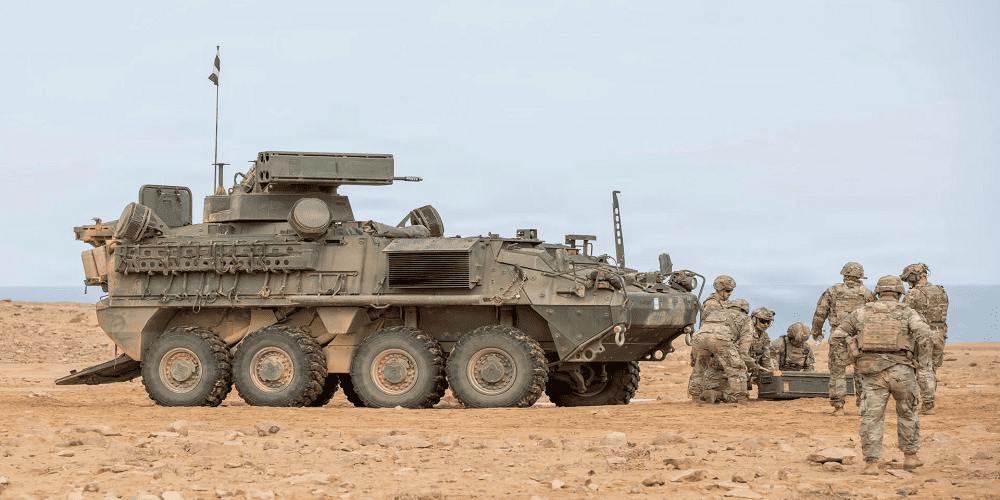
The vast, rugged coastline where the Sahara Desert meets the Atlantic Ocean in southwestern Morocco became the focal point of an international crisis in early May 2026. What began as a large-scale multinational military exercise shifted abruptly into a desperate search and rescue mission. The disappearance of two U.S. Army soldiers near the Cap Draa Training Area highlighted the inherent risks of military service, the strength of international partnerships, and the agonizing uncertainty faced by families waiting for news of their loved ones. The incident, which unfolded over eight tense days, ultimately resulted in the recovery of one soldier's body while the search for the second missing soldier continued, leaving a community in mourning and a military alliance tested by tragedy.
The events of early May 2026 thrust the quiet coastal region near Tan Tan, Morocco, into the international spotlight. The missing soldiers were not engaged in active combat or high-risk tactical maneuvers when they vanished. Instead, they were participating in African Lion 2026, the largest annual joint military exercise on the African continent. This exercise, which ran from April 27 to May 8, involved approximately 5,000 to 7,000 personnel from over 40 countries, including NATO allies and African partner nations such as Ghana, Senegal, and Tunisia . The primary goal of African Lion is to enhance interoperability between U.S. forces, NATO, and African militaries, focusing on all-domain operations, crisis response, and regional security.
On the evening of May 2, 2026, two U.S. Army soldiers were reported missing after failing to return to their unit. Initial reports indicated that the soldiers were last seen near ocean cliffs in the vicinity of the Cap Draa Training Area, a challenging terrain characterized by rocky outcroppings, desert plains, and the powerful Atlantic surf . U.S. Africa Command (AFRICOM) and the Moroccan Royal Armed Forces immediately launched coordinated search and rescue operations. According to defense officials, the initial belief was that the incident was a tragic accident. A U.S. defense official confirmed to multiple news outlets, including the BBC and Reuters, that the incident was not related to terrorism or foul play, but that the two soldiers were believed to have fallen into the ocean . The U.S. official noted that the soldiers were off-duty and on a recreational hike near the training area when the incident occurred .
As the search commenced, more details emerged regarding the moments leading up to the disappearance of the soldiers. Citing sources familiar with the investigation, CBS News reported a harrowing account of the events. According to this report, the group of soldiers was enjoying a sunset near the cliffs. At some point, one soldier fell into the water. Initial reports suggested this soldier may not have been a strong swimmer . In a desperate attempt to save their comrade, the other soldiers attempted to form a human chain using their belts. When this effort failed, a second soldier jumped into the water in an attempt to rescue the first. A third soldier also entered the water but, unable to reach the others, managed to swim back to shore . This narrative painted a picture of extraordinary bravery and selflessness among the soldiers, turning a moment of leisure into a frantic struggle against the unforgiving sea.
The official response to the missing soldiers was immediate and massive in scale. The exercise, which was scheduled to run through May 8, was effectively paused as the coalition pivoted to a real-world search and rescue mission. The operation was a testament to the interoperability that African Lion seeks to foster, as U.S., Moroccan, and other partner forces seamlessly integrated their assets . The search effort, which covered more than 4,600 square miles of sea and coastal area, utilized a wide array of military hardware. This included Moroccan SA-330 Puma and AS332 Super Puma helicopters alongside a U.S. CH-47 Chinook. Maritime assets included French and Moroccan navy frigates, and specialized teams included Moroccan mountaineers and divers . The search zone expanded westward based on ocean current modeling, adding nearly 1,200 square miles a day as time passed .
The technological sophistication of the search was notable, incorporating advanced systems that were being tested during the exercise. Army Lt. Col. Ramone Leonguerrero, speaking at the command and control center for the search, stated, "We’re using every combined joint asset we have at our disposal" . This included the integration of artificial intelligence (AI) and unmanned systems from more than ten vendors. The AI was used to process vast amounts of search data from military sensors on drones, boats, and even jet skis, helping to coordinate the efforts of over 600 personnel from the U.S., Morocco, and other military partners . The seamless integration of forces demonstrated the effectiveness of the training, even as it was applied to a tragedy rather than a combat scenario.
After a week of intensive searching, the first resolution came. On May 9, 2026, a Moroccan military search team found the body of one of the missing soldiers in the water along the shoreline, approximately one mile from where the soldiers were reported to have entered the ocean . The soldier was identified as 1st Lt. Kendrick Lamont Key Jr., a 27-year-old Air Defense Artillery officer assigned to Charlie Battery, 5th Battalion, 4th Air Defense Artillery Regiment, 10th Army Air and Missile Defense Command . The body was transported by helicopter to the morgue at Moulay Hassan Military Hospital in southern Morocco, pending repatriation to the United States . The identification of 1st Lt. Key brought a tragic closure for one family but also served as a stark reminder of the life lost. His military decorations included the Army Achievement Medal and the Army Service Ribbon, a testament to his brief but committed service, having entered the military in 2023 and earned his commission through Officer Candidate School in 2024 .
While the body of one missing soldier was recovered, the search for the second soldier continued. The U.S. military confirmed that a contingent of troops remained in Morocco after the official end of the African Lion exercises on May 8 to provide command and control and to continue search and rescue operations . Col. Alex C. Tignor, a spokesman for the Army’s Southern European Task Force, Africa, expressed gratitude for the partnership. "We are extremely grateful to our Moroccan partners for their continued efforts," Tignor said . The incident, particularly the account of the soldiers attempting a rescue, highlighted the deep bonds of camaraderie within military units. The official statement from officials consistently reiterated that the focus remained on the missing service members and their families, underscoring the human cost behind the headlines . The incident also echoed past tragedies during the African Lion exercises, including a 2012 helicopter crash near Agadir that claimed the lives of two U.S. Marines .
The disappearance of the soldiers occurred within a complex geopolitical context. Morocco is a primary and stable ally of the United States in North Africa. The African Lion exercises are a critical tool for maintaining influence and stability in a region that has seen increasing volatility and a distancing from Western powers by some neighboring nations following military coups in the Sahel region . The seamless cooperation between U.S. and Moroccan forces during the search served as a powerful, albeit tragic, demonstration of their strategic partnership. The Moroccan Royal Armed Forces were instrumental in the recovery of 1st Lt. Key's body and continued to dedicate significant resources to locating the second missing soldier, showcasing a commitment that transcends mere diplomatic formality .
The story of the missing soldiers in Morocco is a multifaceted narrative. It is a story of military precision applied to a humanitarian crisis, a story of cutting-edge technology and artificial intelligence deployed against the unpredictable power of nature. More than anything, it is a profoundly human story. It is the story of 1st Lt. Kendrick Lamont Key Jr., a young officer whose life and career were cut short. It is the story of the second soldier, whose name was not yet released, and whose family continued to wait in agonizing uncertainty. And it is the story of the third soldier, a rescuer who survived, having witnessed the loss of his comrades in the turbulent Atlantic waters. As the sun set over the Cap Draa Training Area, the multinational community remained committed to one remaining goal: bringing the second missing soldier home.
Frequently Asked Questions (FAQs)
- What exactly happened to the missing soldiers in Morocco?
Two U.S. Army soldiers went missing on May 2, 2026, near the Cap Draa Training Area in southwestern Morocco. They were participating in the African Lion 2026 military exercise. Initial reports and subsequent investigations indicate that the soldiers fell into the Atlantic Ocean from a cliff. Witness reports suggest that one soldier fell first, and a second soldier entered the water in an attempt to rescue him, leading to both being swept away. A third soldier who also tried to help managed to return to shore safely. - Were the missing soldiers in Morocco part of a combat mission?
No. The soldiers were not engaged in combat or tactical training when they disappeared. They were off-duty and participating in a recreational hike near the ocean cliffs. The incident has been classified by U.S. defense officials as an accident, specifically ruling out terrorism or kidnapping. They were in Morocco to take part in African Lion 2026, which is an annual joint military exercise focused on training and multinational coordination, not active combat. - Have the bodies of the missing soldiers in Morocco been found?
As of the latest reports, the body of one soldier has been recovered. On May 9, 2026, a Moroccan military search team found the remains of 1st Lt. Kendrick Lamont Key Jr. in the water approximately one mile from where the incident occurred. The body was repatriated to the United States. However, as of the conclusion of the initial search phase, the second missing soldier had not been found. Search efforts were ongoing, with a U.S. contingent remaining in Morocco after the official end of the military exercises. - What is the African Lion military exercise?
African Lion is the largest annual joint military exercise conducted by U.S. Africa Command (AFRICOM). It is designed to improve interoperability and cooperation between U.S. forces, NATO allies, and African partner nations. The 2026 iteration involved 5,000 to 7,000 personnel from over 40 countries, including Morocco, Ghana, Senegal, and Tunisia. The exercise focuses on all-domain operations, crisis response, and enhancing regional security. It is a training event, not a combat deployment. - How did the search for the missing soldiers in Morocco unfold?
The search and rescue operation was immediate and massive, involving U.S., Moroccan, and other partner forces. It utilized ground teams, air assets (including helicopters and surveillance drones), and maritime resources (including frigates and divers). The operation covered over 4,600 square miles of sea and coastal area, expanding daily based on ocean current models. The search also integrated advanced technology, including artificial intelligence, to process data from sensors and coordinate assets effectively. - Who was the identified missing soldier recovered in Morocco?
The soldier whose body was recovered was identified as 1st Lt. Kendrick Lamont Key Jr., aged 27. He was an Air Defense Artillery officer assigned to Charlie Battery, 5th Battalion, 4th Air Defense Artillery Regiment, 10th Army Air and Missile Defense Command. He entered the military in 2023 and earned his commission in 2024. His awards included the Army Achievement Medal and the Army Service Ribbon. - Has there been any official statement from the U.S. military regarding the missing soldiers?
Yes. U.S. Africa Command (AFRICOM) and the Army’s Southern European Task Force, Africa, have released multiple statements. The official statements have confirmed that the incident is under investigation, expressed deep gratitude to Moroccan partners for their search efforts, and consistently stated that the primary focus is on the missing service members and their families. Officials have also clarified that the incident is not believed to be related to terrorism.
Leave A Comment
0 Comment