
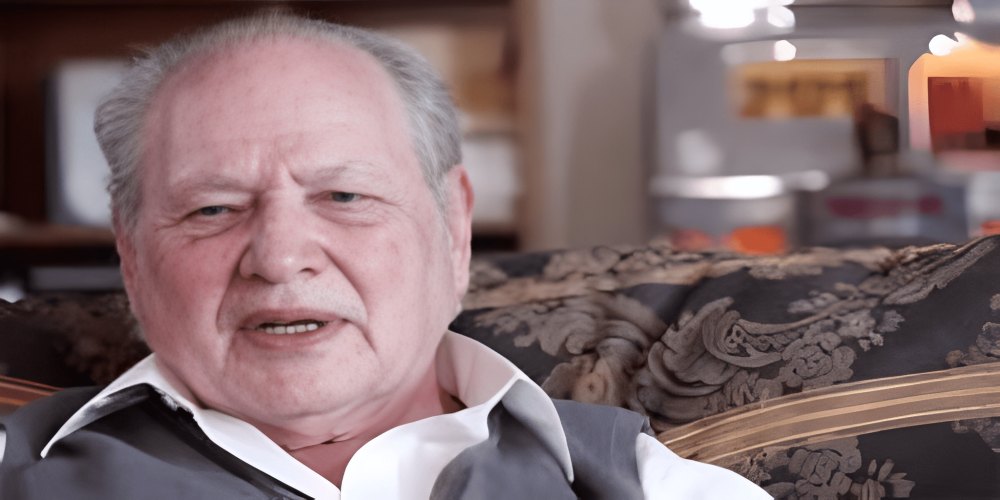
In the grand narrative of technological history, certain names shine with the brilliance of supernovas. Steve Jobs and Steve Wozniak are two such names, eternally etched into the story of Apple Incorporated. Their vision, ambition, and relentless drive transformed a garage startup into the most valuable company on earth. Yet, nestled quietly in the official incorporation documents of Apple Computer, dated April 1, 1976, lies a third signature. That signature belongs to Ronald Wayne, a man whose role in the foundation of Apple is simultaneously critical and almost completely forgotten by the mainstream. The story of Ronald Wayne is not a tale of victory or glory. Instead, it is a profound human drama about risk, personality, and the elusive nature of fortune. It serves as a haunting counterpoint to the mythology of Silicon Valley, reminding us that for every person who gambles and wins a kingdom, there are others who choose sanity and security over a potential empire.
Ronald Wayne was not a fresh-faced college dropout when he met Steve Jobs. He was a man in his early forties, a veteran of the electronics industry who had already weathered professional and financial storms. He was an engineer and a manager at Atari, the pioneering video game company where a young and abrasive Steve Jobs also worked. While Jobs was brilliant, difficult, and driven by a spiritual and material hunger, Wayne was pragmatic, experienced, and cautious. He was also a man who had already experienced a business failure. A few years prior, he had co-founded a slot machine manufacturing company that collapsed, leaving him with significant financial liabilities. That experience left a permanent scar on his financial psychology. He was not a gambler. He was a systems thinker, a draftsman, and a man who valued clear, calm logic over chaotic ambition.
When Steve Jobs and Steve Wozniak decided to formalize their partnership to sell the Apple I computer, they needed a third person. Jobs, despite his youth, possessed immense charisma and a vision for the future of personal computing. Wozniak was the engineering wizard who could design elegant hardware with breathtaking efficiency. But between them, there was a volatile, almost volatile dynamic. Jobs could be impulsive and demanding, while Wozniak was gentle and more interested in engineering than in business. They needed an adult in the room. They needed someone who could mediate conflicts, draft a legal partnership agreement, and bring a semblance of stability to the nascent venture. That person was Ronald Wayne. He was the classic "grown-up" in the room, a man with a steady hand and a rational mind.
So, on April Fool's Day in 1976, Ronald Wayne, alongside Jobs and Wozniak, signed the founding partnership agreement for Apple Computer. The roles were clearly defined. Steve Wozniak would provide the engineering and the circuit board designs. Steve Jobs would provide the vision, the marketing drive, and the salesmanship. Ronald Wayne would provide administrative oversight, mechanical engineering drafting, and critical adult supervision. He also designed the first Apple logo. It was not the sleek, bitten apple we recognize today. Wayne’s logo was far more ornate and Victorian in style. It depicted Isaac Newton sitting beneath an apple tree, with a single glowing apple hanging precariously above his head. On the outer border was a quote from Wordsworth: "Newton… a mind forever voyaging through strange seas of thought… alone." While this logo was quickly replaced by Rob Janoff’s iconic rainbow apple design, it reflected Ronald Wayne’s intellectual and artistic sensibility.
The division of equity in this new partnership was as follows: Wozniak received 45 percent, Jobs received 45 percent, and Ronald Wayne received 10 percent. Ten percent of Apple Computer. At the time, this was not seen as an absurdly generous or stingy allocation. It reflected the contribution. Wozniak had invented the machine. Jobs had the drive to sell it. Wayne was providing legal structure, documentation, and a calming presence. In the early days, he worked on the manual for the Apple I, wrote the partnership agreement, and even helped with some mechanical drawing. But very quickly, the latent tension in the arrangement became apparent to Ronald Wayne.
The triggering event came within two weeks of the company's founding. Steve Jobs, acting on his characteristic instinct to move fast and secure sales, secured an order of one hundred Apple I computers from a local computer store called the Byte Shop. The catch, however, was that Apple did not have the capital to buy the necessary components to build those one hundred computers. The Byte Shop, run by Paul Terrell, wanted fully assembled and tested circuit boards, not just kits. To fulfill the order, Jobs went out and persuaded suppliers to give him thirty days of credit for the parts. This was a high-risk move. If the Byte Shop failed to pay Apple, or if Apple failed to build the computers in time, Steve Jobs would be personally liable for the cost of the parts. And because it was a general partnership, not a limited liability corporation, every single partner was personally liable for all the debts of the business. That meant Ronald Wayne's personal assets, his savings, his home, everything he had carefully protected after his previous business failure, was on the line.
Ronald Wayne looked at the situation through his experienced, cautious eyes. He saw Steve Jobs, a volatile twenty-one-year-old with no financial track record, pushing the company into debt. He saw the chaotic, shoestring nature of their operation in the Jobs family garage. He had no appetite for another bankruptcy. He had no desire to be dragged into a legal and financial catastrophe if the Byte Shop deal soured. While the promise of Apple might have been thrilling to a younger, unburdened person, to Ronald Wayne it felt like the same precipice he had fallen from before. In a moment of stark, painful clarity, he decided to do the rational thing. He walked away.
Just twelve days after the partnership was signed, Ronald Wayne returned to the drafting table. He wrote a document titled "Statement of Withdrawal from Partnership." He gave up his entire ten percent stake in Apple Computer. In exchange for relinquishing all rights, present and future, to the company, he received a single payment of eight hundred dollars. Eight hundred dollars. That is the sum total of the cash Ronald Wayne received for his share of a company that would, within a few decades, become a three-trillion-dollar behemoth. Had he held onto that ten percent, even after subsequent dilution from later rounds of venture capital and the company going public, his stake would have been worth well over one hundred billion dollars. He would have been one of the wealthiest human beings on the planet. But he walked away with eight hundred dollars.
The immediate reaction from the outside world, then and now, is often a mixture of shock and pity. How could anyone be so foolish? How could someone sell the lottery ticket of a lifetime for a few hundred dollars? But to view Ronald Wayne through that lens alone is to misunderstand the man, the times, and the nature of risk. In 1976, Apple was not Apple. It was a tiny, debt-ridden partnership operating out of a garage. The personal computer market was a hobbyist's niche. There was no iPhone, no Macintosh, no App Store, no trillion-dollar valuation. The chance of Apple failing, of the Byte Shop order imploding, of the partners being sued into personal bankruptcy, was at least as high as the chance of success. Wayne had lived through failure before. For him, the nightmare scenario was not missing out on future wealth; it was losing his home and his peace of mind in the present. He chose certainty over speculation. He chose a known, modest life over an unknown, potentially catastrophic one.
After leaving Apple, Ronald Wayne did not vanish into a cave of bitterness. He went on to live a full and productive life. He continued to work as an engineer, a manager, and a stamp and coin dealer. He designed a sophisticated mail handling system for a company named Lawrence Livermore National Laboratory. He co-founded another company, which was marginally successful. He also amassed a collection of rare stamps and coins, many of which he sold later for comfortable, if not spectacular, sums. He moved to a modest home in Prescott, Arizona, a small town far removed from the frenetic energy of Silicon Valley. For decades, he lived quietly, occasionally giving interviews to journalists who were inevitably fascinated by his story. He never displayed overt bitterness. Instead, he consistently framed his decision as a rational choice made by a man who knew his own limits. He often said that if he had stayed at Apple, the stress and the battles with Steve Jobs would have likely killed him. He believed he traded a potential fortune for his own life and sanity.
There is a poignant irony in the fact that Ronald Wayne designed the first Apple logo featuring Isaac Newton. Newton, the scientist who discovered the laws of gravity, who understood the predictable, mechanical nature of physical reality, is a fitting symbol for Wayne. Newtonian physics is deterministic. Cause and effect are clear. Ronald Wayne wanted a business that operated under predictable Newtonian rules. He wanted clear contracts, limited liability, and stable cash flow. What Steve Jobs represented, by contrast, was not Newtonian but quantum. Jobs was unpredictable, his success a matter of probabilities that could collapse into either nothingness or infinite value. Wayne was not built for that quantum world. He was a man of mechanical drawings and rational agreements. Jobs was a man of reality distortion fields and insane risks. In that sense, Ronald Wayne’s departure from Apple was not a mistake. It was a necessary alignment of personality with destiny.
Over the decades, as Apple’s valuation skyrocketed, the story of Ronald Wayne became a legend. It is often cited in business schools as the ultimate cautionary tale about the cost of risk-aversion. It is used to illustrate the concept of opportunity cost in its most extreme, almost absurd form. Every time Apple launched a new product—the iPhone, the iPad, the MacBook Air—some journalist would recalculate what Ronald Wayne’s ten percent would be worth. The numbers grew from millions to billions to tens of billions. By the early 2020s, with Apple’s market capitalization frequently exceeding two and a half trillion dollars, the value of his forfeited stake would have made him a centibillionaire, ranking alongside Jeff Bezos and Elon Musk. Yet, when asked about this in interviews, Wayne remained remarkably composed. He would say that he had a good life, that he never regretted the decision because it was the correct decision for him at that moment. He noted that he did not have the stomach for the cutthroat battles and the extreme stress that defined Jobs’s leadership style. He was happy in Prescott.
In the later years of his life, Ronald Wayne did manage to reclaim a tiny fragment of Apple’s success, though not through his original equity. He sold an original copy of the Apple I computer manual that he had written and drafted. That manual, a relic of the company’s birth, sold at auction for a healthy sum. He also sold the original partnership agreement he had signed, another document that fetched tens of thousands of dollars. He even sold the original, text-based Apple logo he had designed. These were not billions of dollars, but they were meaningful payments that acknowledged his historical role. He also received a small pension from Apple in his later years, a gesture from a company that officially acknowledged him as a co-founder, albeit one who left almost immediately. Steve Jobs, before his death, occasionally mentioned Wayne in interviews, not with contempt but with a kind of distant respect. Jobs understood that Apple was not a place for cautious, middle-aged pragmatists. It was a place for young, hungry, and sometimes reckless visionaries. Ronald Wayne did not fit that mold, and there is no shame in that.
The lessons from the life of Ronald Wayne extend beyond the simple financial math of selling Apple shares. First, it teaches us that historical outcomes are never certain at the time they unfold. It is easy to look back from 2025 and see Apple as an inevitable triumph. But in 1976, the personal computer industry was a graveyard of failed startups. For every Apple, there were dozens of companies like Sol-20, IMSAI, and Processor Technology that faded into obscurity. Wayne’s assessment of the risk was not irrational; it was statistically sound. Second, the story highlights the emotional and psychological costs of extreme wealth creation. Ronald Wayne often said that the stress of Apple would have killed him. Had he stayed, he might have suffered a heart attack from the confrontations with Jobs. In that case, he would not have lived to enjoy the wealth. He chose life and contentment. Third, the story challenges the glorification of relentless risk-taking. Silicon Valley culture venerates the entrepreneur who bets everything, who lives on ramen noodles, who mortgages their house to fund a startup. But for every success story, there are thousands of quiet bankruptcies. Ronald Wayne had already experienced one bankruptcy. He was wise enough not to court a second. His wisdom, in a different way, was as profound as Steve Jobs’s vision.
In his quiet home in Prescott, Arizona, Ronald Wayne spent his later years tending to his stamp collection, reading history, and enjoying the quiet life. He did not own a yacht or a private island. He did not give motivational speeches. He was, by all accounts, a gentle, thoughtful, and unpretentious man. Journalists who visited him often expected to find a broken figure, weeping over a lost fortune. Instead, they found a man at peace with his choices. He acknowledged the irony, the sheer astronomical scale of the money he had given up, but he always returned to the same simple truth: at the time, the risk was unacceptable to him. He was not a prophet. He was an engineer. And engineers do not gamble.
The name Ronald Wayne remains a fascinating footnote in Apple’s origin story. He is the ghost at the feast, the third founder who vanished before the celebration truly began. His absence is as important as the presence of Jobs and Wozniak. Why? Because Wayne’s departure opened the door for others. After he left, Apple needed a new adult supervisor, a new business mind. That eventually led to Mike Markkula, who provided critical early funding and business mentorship. And later, it led to John Sculley, for better and worse. The vacuum created by Ronald Wayne’s departure was filled by a series of executives who, unlike Wayne, were willing to ride the tiger of Apple’s growth. But one must ask: if Wayne had stayed, would he have been able to moderate Steve Jobs? Unlikely. More probably, he would have been run over by Jobs’s ambition, and his remaining sanity would have been destroyed. In that sense, his withdrawal was the best possible move for his own well-being.
Ultimately, the story of Ronald Wayne is not a tragedy. It is a meditation on the nature of happiness. In a world obsessed with wealth accumulation, with billion-dollar valuations and unicorn startups, Wayne’s choice stands as a defiant, quiet testament to the value of a simple, unbothered life. He did not want to rule the world. He wanted to draft mechanical drawings, trade rare stamps, and sleep soundly at night without worrying about debt collectors or lawsuits from creditors. He wanted Newtonian certainty in a quantum universe. He failed to achieve that certainty, but he achieved something arguably more valuable: peace. The eight hundred dollars he took in exchange for Apple is often cited as the worst financial decision in modern history. But when Ronald Wayne looked back from the calm of his Arizona home, he saw it differently. He saw a man who knew his own limits and chose to preserve himself. And in that self-preservation, he found a fortune of a different kind.
Frequently Asked Questions about Ronald Wayne
What is Ronald Wayne most famous for in the context of Apple?
Ronald Wayne is famous for being the third co-founder of Apple Computer, alongside Steve Jobs and Steve Wozniak. He is best known for selling his ten percent stake in the company for just eight hundred dollars only twelve days after signing the partnership agreement, a stake that would eventually be worth over one hundred billion dollars.
Why did Ronald Wayne decide to leave Apple so soon after it was founded?
Ronald Wayne left Apple primarily because of his extreme aversion to financial risk. He had previously lost money in a failed slot machine business and was personally liable for any debts Apple incurred. When Steve Jobs took on debt to buy parts for the first order of Apple I computers, Wayne feared he would lose his personal assets and chose to withdraw from the partnership to protect himself.
How much money did Ronald Wayne receive for his share of Apple, and what would it be worth today?
He received a one-time payment of eight hundred dollars. Had he retained his original ten percent stake through all stock splits, public offerings, and subsequent equity raises, his holdings would be worth well over one hundred billion dollars in 2025, making him one of the richest people in the world.
Does Ronald Wayne regret his decision to leave Apple?
Publicly, Ronald Wayne has consistently stated that he does not regret his decision. He has explained that the stress of working with Steve Jobs and the financial risk of the partnership would have been unbearable for him. He often said that staying at Apple would have likely killed him, so he considers his choice a rational one for his personal well-being and longevity.
What did Ronald Wayne do after leaving Apple?
After leaving Apple, Ronald Wayne returned to his career as an engineer and manager. He worked at various companies, including Lawrence Livermore National Laboratory, where he designed a mail handling system. He also ran a successful stamp and coin dealership. He lived a modest, quiet life in Prescott, Arizona, until his death in 2024 at the age of 90.
Did Ronald Wayne contribute anything else to Apple besides being a co-founder?
Yes, besides drafting the original partnership agreement and providing initial adult supervision, Ronald Wayne designed the very first Apple logo. This logo depicted Isaac Newton sitting under an apple tree with a famous Wordsworth quote on the border. He also wrote the original operating manual for the Apple I computer.
Leave A Comment
0 Comment