
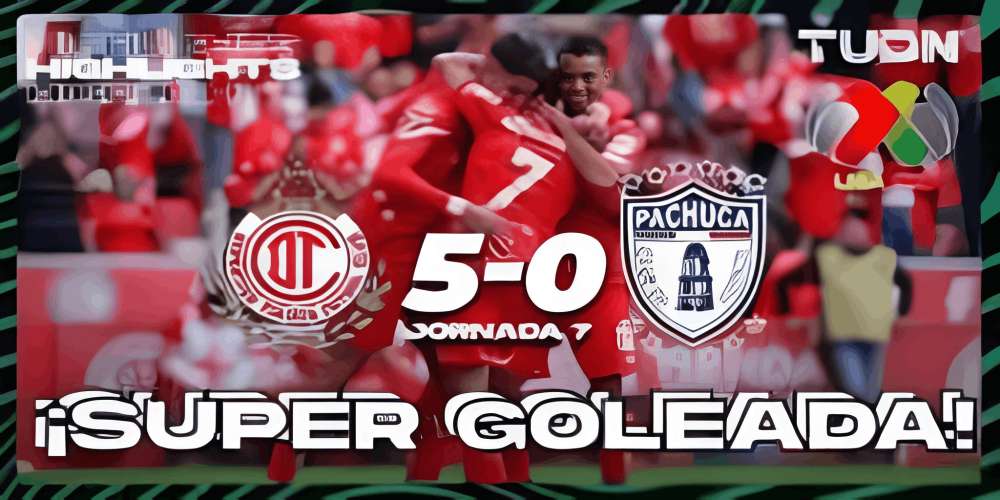
When we talk about Mexican football, the first rivalries that spring to mind are usually the Clásico Nacional between Chivas and América, or the Clásico Regio between Monterrey and Tigres. But lurking beneath these media giants is a fixture that, for pure, unadulterated passion and geographical significance, deserves just as much attention: the clash between the Red Devils of Toluca and the Tuzos of Pachuca. The phrase Toluca - Pachuca represents more than just a match; it encapsulates a battle of industrial pride, a contrast in footballing philosophies, and a rivalry that has simmered for over a century in the high-altitude plains of central Mexico.
To understand the weight of a Toluca - Pachuca encounter, one must first look at a map. Both cities sit in the heart of Mexico, separated by roughly 140 kilometers of winding highway through the State of Mexico and Hidalgo. Toluca, the capital of the State of Mexico, sits at a staggering 2,667 meters above sea level. Pachuca, the capital of Hidalgo, is slightly lower at 2,432 meters. This altitude creates a unique physical challenge for visiting players, but for the locals, it is home. When these two sides meet, the thin air isn’t an excuse; it is a weapon. I have always found it fascinating how visiting teams often run out of steam in the final twenty minutes of a Toluca - Pachuca match, simply because their lungs are not conditioned to the rarefied atmosphere of the Mexican plateau.
The history of this fixture dates back to the early 20th century, long before the professional Liga MX was established. Toluca was founded in 1917 by a group of Spanish immigrants, quickly adopting red as their signature color. Pachuca, incredibly, was founded in 1901 by British miners working in the region’s silver mines. This makes Pachuca one of the oldest football clubs in the Americas. The early encounters between Toluca and Pachuca were not just local derbies; they were clashes between the Spanish and British influences on Mexican football. That cultural undertone persists today, even if fans don’t consciously think about it. You can see it in the playing styles: Toluca historically prefers a more technical, possession-based game reminiscent of La Liga, while Pachuca has often leaned into a more physical, structured system, echoing the British steel of their founders.
In the modern era, the Toluca - Pachuca rivalry has been defined by the sheer volume of championships. While neither club is as wealthy as the giants from Mexico City or Monterrey, they have outperformed their budgets through youth development and tactical discipline. Toluca enjoyed a golden era in the late 1990s and early 2000s, winning four league titles between 1998 and 2005 under the guidance of coaches like Enrique Meza and José Saturnino Cardozo. That Toluca team was machine-like. They were not flashy, but they were ruthlessly efficient at the Nemesio Díez Stadium, affectionately known as "La Bombonera."
Pachuca, on the other hand, countered with their own dynasty. Beginning in the late 1990s, the Tuzos (a nickname derived from the gophers that plague Hidalgo’s cornfields) won a string of titles, including the 1999 Invierno, 2001 Invierno, and then again in 2006 and 2007. The constant success of both clubs meant that for nearly two decades, a Toluca - Pachuca match often had direct implications on the league table’s top spots. You would rarely see this fixture played mid-table. More often than not, it was a battle for the leadership of the group stage or a preview of the Liguilla final.
One cannot discuss a Toluca - Pachuca match without mentioning the individual legends who have defined this rivalry. For Toluca, the name José Saturnino Cardozo is sacred. The Paraguayan striker, who walked with a limp due to a horrific knee injury suffered early in his career, was the most lethal goalscorer the club has ever seen. He scored over 200 goals for the Red Devils, and many of those came against Pachuca. I recall one particular match in the early 2000s where Cardozo, despite barely being able to train during the week, scored a hat trick against Pachuca at the Nemesio Díez. The fans chanted his name for ten minutes after the final whistle.
On the Pachuca side, the legendary figure is Gabriel Caballero. The Argentine-Mexican winger was the heart and soul of the Tuzos’ championship teams. His pace and crossing ability tormented Toluca’s defenses for years. Caballero later became a coach for Pachuca, further cementing his legacy. More recently, the rivalry has been carried by players like Franco Jara for Pachuca and Alexis Canelo for Toluca. These modern footballers understand that when the calendar says Toluca - Pachuca, the normal rules of football do not apply. You cannot jog. You must sprint. You cannot hesitate. You must tackle.
The tactical battle in a Toluca - Pachuca match is a joy for purists. Toluca typically sets up with a compact 4-4-2 or a 4-2-3-1, relying on quick transitions and set pieces. They are masters of the "centro a tierra" or low-driven cross into the box. Pachuca, especially under their recent identity forged by the youth academy, prefers a 3-5-2 or a 4-3-3 that prioritizes wing overloads. The clash of systems often results in a midfield war. Because both teams prioritize work rate, you rarely see a lazy performance. It is not uncommon for a Toluca - Pachuca game to end with six yellow cards and one red. The referees allow a certain level of physicality because the fans demand it. If a player shies away from a 50-50 ball in this derby, he risks being booed by his own supporters for the rest of the season.
Another layer to this rivalry is the transfer market. Toluca and Pachuca have frequently poached players from each other. It is a bitter transaction. When a player switches from the Red Devils to the Tuzos, or vice versa, they are immediately labeled a traitor. I remember when defender Aquivaldo Mosquera left Toluca for Pachuca. The next time he returned to the Nemesio Díez, every time he touched the ball, a roar of hatred came down from the stands. That is the beauty of this fixture. It is personal. It is not manufactured by television networks. It is real resentment built over decades of close competition.
The stadiums themselves add to the lore. Toluca’s Estadio Nemesio Díez is a cauldron. It is small by modern standards, holding just over 30,000 fans, but the stands are incredibly steep and close to the pitch. When the Toluca faithful are in full voice, the sound has nowhere to go. It swirls around the field, disorienting opposing players. Visiting Pachuca players often say that playing at "La Bombonera" is like playing inside a drum. Conversely, the Estadio Hidalgo in Pachuca is a wind tunnel. Because the stadium is open on one side, the high-altitude winds create unpredictable gusts. Goalkeepers hate playing there. A simple back-pass can turn into a corner kick or an own goal. Home advantage is not a myth in a Toluca - Pachuca match; it is a meteorological and architectural reality.
Let us not ignore the socioeconomic aspect. Toluca is an industrial city, home to large manufacturing plants, including a major Toyota factory. It is a city of workers, engineers, and assembly lines. Pachuca, historically a mining town, has a more rough-and-tumble, pastoral identity. It is a city that feels smaller and more isolated despite being modernizing rapidly. The fan bases reflect this. The typical Toluca supporter is stoic and serious, viewing football as a matter of efficiency. The typical Pachuca supporter is louder and more prone to gallows humor, shaped by the hardscrabble history of their mining ancestors. When these two groups collide on a match day, there is a tangible class and cultural tension that you do not feel in richer, more commercial derbies.
In recent years, the pendulum of the Toluca - Pachuca rivalry has swung back and forth rapidly. The 2020s saw Pachuca win another league title in the Clausura 2022, while Toluca has re-emerged as a consistent playoff contender under the management of Renato Paiva and later Ignacio Ambríz. The matches have become more open and chaotic. The old defensive rigidity has given way to end-to-end attacks. For neutrals, this is excellent. A recent Toluca - Pachuca match ended 4-3 in favor of the home side, with two goals scored after the 85th minute. That nature of that result is typical. You are never safe in this derby. A two-goal lead is the most dangerous advantage you can have.
Looking to the youth, both clubs are renowned for their academies. Toluca’s academy has produced players like Alfredo Talavera and Carlos Esquivel. Pachuca, however, operates one of the best youth systems in the world. Their partnership with Universidad del Fútbol is legendary. They have developed stars like Hirving Lozano, Héctor Herrera, and the current sensation from Pachuca’s youth ranks who will inevitably be sold to Europe. When a youth product from Toluca faces a youth product from Pachuca, the pride of two distinct development philosophies is on the line. The Toluca - Pachuca match becomes a job interview for the Mexican national team. Coaches from El Tri frequently attend these matches because they know they will see passionate, technically sound football played under extreme pressure.
There is also the matter of the "Pequeño Clásico" or "Clásico de la Independencia." Some media outlets have tried to brand this fixture as the "Independence Clásico" because both cities played roles in Mexico’s war of independence against Spain. While this branding is a bit forced, it does add a layer of historical weight. The fans of Toluca and Pachuca appreciate the history, even if they do not actively wave flags about it. They know that their cities were important long before football arrived, and now their football clubs are the standard-bearers for regional pride against the centralizing force of Mexico City.
One cannot write about Toluca - Pachuca without acknowledging the controversial moments. The rivalry has seen its share of violent incidents. In 2014, a brawl broke out in the tunnel between players after a particularly nasty Liga MX playoff match. Accusations of spitting, biting, and death threats were exchanged. While the league has tried to calm tensions, the animosity remains just below the surface. It is a rivalry that cares little for fair play. It cares about victory. If that means a cynical foul to break up a counter-attack, so be it. If that means the coach screaming in the face of the fourth official, that is expected.
From a fan’s perspective, traveling to an away Toluca - Pachuca match is a rite of passage. The drive between the cities is through the stunning, pine-covered mountains of the Sierra de las Cruces. But the beauty of the landscape contrasts sharply with the hostility of the away section. Visiting fans are allocated the worst seats in the house, behind a goal with a restricted view. They are pelted with beer cups and insults. Police escorts are mandatory. It is not a family-friendly day out. It is a war. And the supporters love it that way. They would reject any attempt to sanitize or commercialize the hatred between Toluca and Pachuca.
In terms of overall balance, who has the upper hand historically? The numbers are incredibly close. Toluca has won the league championship eight times to Pachuca’s seven. In head-to-head regular season matches, Toluca holds a slight lead by about five wins over the century-long history. But in playoff matches, Pachuca has surprisingly knocked Toluca out more often. The Tuzos seem to have a psychological edge in knockout football, while Toluca is the king of the regular season grind. This statistical parity is what makes the rivalry so compelling. Neither side can claim total dominance. Every new Toluca - Pachuca match is a chance to rewrite the narrative.
Looking forward, the rivalry faces challenges. Global football is fragmenting attention. Younger fans in Toluca and Pachuca might be more interested in watching Erling Haaland play for Manchester City than traveling to a local stadium. The rise of streaming and video games threatens the raw, visceral nature of a live derby. However, I remain optimistic. You cannot replicate the feeling of a cold, high-altitude night in Toluca when the Red Devils score a 90th-minute winner against Pachuca. The ground shakes. The grown men cry. The air itself seems to vibrate at a different frequency. That is the magic of this fixture. It is not the biggest rivalry in Mexico, but it might just be the most honest one.
In conclusion, the keyword Toluca - Pachuca stands for resilience, regional pride, and high-quality football played under brutal physical conditions. It is a rivalry for the purist, the masochist, and the romantics who believe that football is more than a business. It is a collision of two very different cultures – the industrial engineer versus the mining gopher – fighting for the same piece of the Mexican football dream. As long as the altitude remains punishing and the fans remain rabid, this fixture will survive any trend or corporate rebranding. Long live the Toluca - Pachuca derby.
FAQs: The Toluca - Pachuca Rivalry
1. Why is the Toluca - Pachuca match considered a derby if the cities are not neighbors?
It is considered a regional derby because both clubs represent the central highlands of Mexico, an area often overshadowed by Mexico City. The close proximity (about 140 kilometers) and the shared history of industrial and mining economies create a natural geographic rivalry. Furthermore, both clubs have competed at the top of Liga MX simultaneously for decades, turning every match into a battle for regional bragging rights.
2. Which stadium is harder for visiting teams to play in, Toluca’s or Pachuca’s?
Most players and pundits would argue that Toluca’s Estadio Nemesio Díez, known as "La Bombonera," is the more intimidating venue. Its steep, enclosed stands trap crowd noise and place fans extremely close to the pitch. Pachuca’s Estadio Hidalgo has challenging wind conditions due to its open design, but the psychological pressure of playing inside a cauldron like Toluca’s is widely considered more difficult.
3. Do fans of Toluca and Pachuca engage in violence before matches?
Unfortunately, like many intense football rivalries in Latin America, there have been incidents of fan violence between Toluca and Pachuca supporter groups. While the clubs and Liga MX have implemented stricter security measures, including bans on away fans for some high-risk matches, the tension requires heavy police presence at every fixture. The vast majority of supporters are peaceful, but the rivalry’s edge can sometimes boil over.
4. Who is the all-time top scorer in Toluca - Pachuca matches?
The all-time top scorer in this specific head-to-head fixture is José Saturnino Cardozo of Toluca. The Paraguayan striker scored over a dozen goals against Pachuca during his career in the late 1990s and 2000s. For Pachuca, the top scorer is Gabriel Caballero, followed closely by Franco Jara from the modern era.
5. How much does altitude affect a Toluca - Pachuca game?
Significantly. Both cities sit at over 2,400 meters above sea level. The thin air causes the ball to fly faster and straighter than normal, and it reduces player stamina by roughly 15-20 percent compared to sea level. Visiting teams must arrive at least 48 hours early to acclimatize. The altitude gives a tangible home advantage to whichever side is playing in their own stadium.
6. Where can I watch a live Toluca - Pachuca match internationally?
Broadcasting rights vary by country. In the United States, matches are typically broadcast on TUDN, UniMás, or streaming services like FuboTV and Vix+. In Mexico, the match is usually carried by TUDN or Canal 5, depending on the week. Because this is a top-tier fixture, it is rarely blacked out. For the most current schedule, check the official Liga MX website just before match day.
7. Has a Toluca vs. Pachuca match ever decided a league final?
Yes. One of the most memorable moments in the rivalry came during the 2003 Apertura final. Pachuca and Toluca faced off over two legs to decide the championship. Toluca won the first leg at home, but Pachuca overcame the deficit in the return leg at the Estadio Hidalgo. Pachuca eventually won the penalty shootout to claim the title, inflicting a painful defeat on Toluca that their fans still remember bitterly.
Leave A Comment
0 Comment