
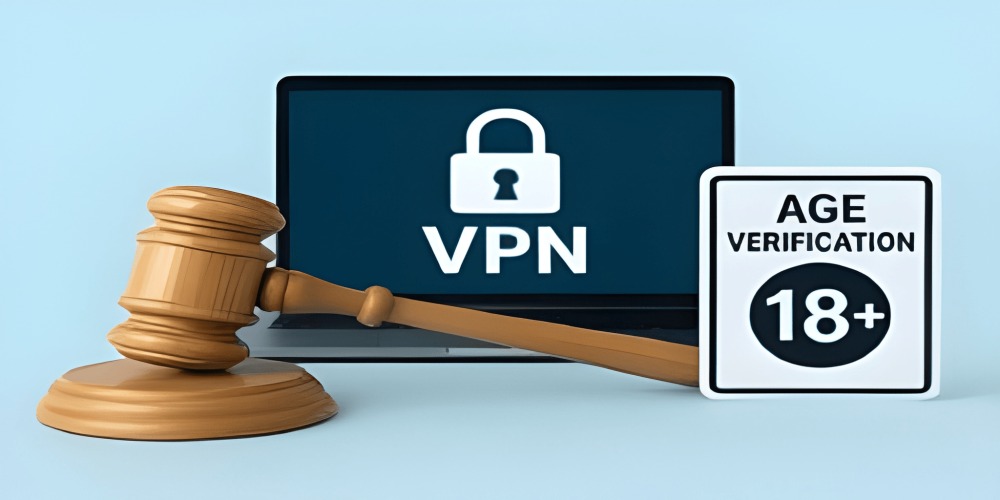
If you live in Utah or run a website that reaches people there, you have probably heard something about a new set of rules targeting online age checks. But the part that catches most people off guard is how these rules interact with VPNs. A virtual private network, or VPN, is a tool that many folks use every day to protect their browsing habits from prying eyes. Under the way Utah has chosen to enforce its minor protection statutes, using a VPN to get around an age gate could trigger legal trouble for the website, not for the user. This article walks through the nuts and bolts of the vpn age verification law utah, why it exists, who it affects, and what you can do about it whether you are a business owner or just someone who values privacy online.
Utah did not pass a law that says the words virtual private network in the title. Instead, the state built a broader age verification requirement into several pieces of legislation focused on social media and app stores. The idea sounds simple on the surface. Websites and apps that allow access to content considered harmful for minors must confirm the age of each user before showing that material. But the legislators quickly realized that a teenager with basic technical knowledge could download a free VPN, route their traffic through a server somewhere in Europe or Asia, and make it look like they were logging in from a place with no age restrictions at all. That gap in enforcement led the state attorney general to issue guidance saying that any website covered by the law must take reasonable steps to detect and block VPN connections. That guidance is what people now call the vpn age verification law utah, even though the phrase itself does not appear in the original statute.
The technical reality of complying with this rule is messier than most lawmakers anticipated. To figure out whether an incoming connection is hiding behind a VPN, a website has to inspect certain signals from the user's browser. The most common method involves checking the IP address against a constantly updated list of known VPN exit nodes. Companies that specialize in fraud detection sell access to these lists for a monthly fee. When a Utah resident tries to visit a site with their VPN turned on, the site's server queries one of these databases. If the database says the IP belongs to a VPN provider, the site has two choices under the vpn age verification law utah. It can either block the visitor entirely or force them to complete a secondary verification step, such as uploading a scan of their drivers license or taking a live selfie for age estimation.
Neither option sits well with privacy advocates or ordinary users. Blocking someone for using a VPN punishes people who rely on those tools for legitimate reasons like a journalist protecting sources, a domestic violence survivor hiding from an abuser, or a remote worker accessing their company's secure network. On the other hand, demanding a government ID destroys any remaining anonymity the user might have wanted. Many adults simply want to read the news or browse a forum without attaching their real name and address to every click. The vpn age verification law utah does not offer exceptions for these cases. If the website decides to enforce the rule strictly, the VPN user loses access unless they expose their identity.
Small business owners find themselves in an especially tough spot. A person running a niche forum with a few thousand members might suddenly realize that Utah law applies to them because a handful of users live in the state. Hiring a lawyer to interpret the statute costs money they do not have. Subscribing to a VPN detection API adds another monthly expense that could easily exceed the revenue from Utah visitors. Some of these small operators have chosen a drastic solution. They block every IP address that geolocates to Utah, regardless of whether the visitor uses a VPN or not. That approach keeps them fully compliant with the vpn age verification law utah because they are not serving Utah residents at all. But it also locks out every college student, grandparent, and small business owner in the state who might have wanted to engage with their content.
The legal challenges started almost immediately after enforcement began. Civil liberties groups filed suit in federal court arguing that the rule violates the First Amendment. Their reasoning goes like this. The right to speak anonymously has been recognized by the Supreme Court in several landmark cases. A VPN is just a modern tool for exercising that right. If the state forces websites to block VPNs, it effectively eliminates anonymous speech for anyone accessing those sites. The plaintiffs also raised a Dormant Commerce Clause argument, saying that Utah cannot regulate internet traffic that routes through servers in other states. A VPN might direct a user's connection through a data center in Virginia or Texas before reaching the final website. Applying Utah law to that connection means Utah is telling Virginia what to do with its own infrastructure. A federal judge issued a preliminary injunction in early 2026 that stopped enforcement against the specific groups that filed the lawsuit, but the injunction does not apply to anyone else. For the vast majority of websites, the vpn age verification law utah remains active and enforceable.
Enforcement falls to the Utah Division of Consumer Protection, which has a small staff and a large mandate. Critics say the agency lacks the resources to go after more than a handful of high profile violators. The law allows for civil penalties of up to twenty five thousand dollars per day for each minor who accesses restricted content by using a VPN to bypass age checks. In practice, the attorney generals office has said it will focus on major platforms like social media networks and adult entertainment sites during the first year. Smaller blogs and forums are unlikely to receive a notice unless someone files a specific complaint. That complaint driven model creates an odd incentive for rival businesses or disgruntled users to weaponize the law against each other. A competitor in the same niche market could encourage Utah residents to file complaints about a rivals website, triggering an investigation and potentially costly legal fees, regardless of whether the rival actually violated the rule.
From the perspective of an ordinary person living in Utah, the experience of browsing the web has changed noticeably. Before the law took effect, a resident could keep their VPN running at all times without thinking about it. Now, certain websites display a message that says something like Your connection appears to be anonymized. Utah law requires age verification before you can continue. Depending on how the site implemented its compliance system, the user might have the option to disable their VPN and refresh the page. If disabling the VPN is not possible because the user needs that privacy protection for other reasons, the only way forward is submitting identification. Many people simply close the tab and find a different website based outside of Utah. That behavior shift hurts local businesses that rely on digital sales or advertising revenue. A store in Salt Lake City that sells handmade goods might lose customers simply because those customers ran into a verification wall while browsing on their lunch break.
Parents who supported the original age verification idea have mixed feelings about the VPN aspect. Some appreciate that the state is trying to close an obvious loophole. A teenager who really wants to see restricted content can still find ways around the system, but the added friction probably stops some kids who are not particularly determined. Other parents worry that the law encourages a surveillance mindset that their children will grow up thinking is normal. They ask a fair question. If we teach kids that the government should block privacy tools rather than teaching them how to use those tools responsibly, what kind of adults will they become? The vpn age verification law utah does not include any educational component or media literacy funding. It is purely a blocking mechanism.
Businesses that want to follow the law without alienating their user base have developed some practical strategies. The most thoughtful approach involves a risk scoring system rather than a hard block. A visitor using a corporate VPN from a well known company like a large bank or a hospital might receive a low risk score because that IP address is not associated with anonymization services. The site could show a simple click through asking the user to confirm they are over eighteen, then allow access. A visitor using a consumer VPN from a privacy focused provider like those that advertise heavily for torrenting and bypassing geo blocks would receive a high risk score and be sent to the ID verification step. After the user completes that step once, the site issues a short lived cookie or token that exempts them from future checks for thirty days. That method respects the users time and privacy while still giving the site a defensible compliance position under the vpn age verification law utah.
Another strategy that has gained traction is geofencing at the state level. A website can purchase a relatively cheap IP geolocation database that maps IP addresses to specific US states. Accuracy is not perfect, but it is good enough for compliance purposes. The site then checks every incoming visitor. If the IP address appears to come from Utah, the site redirects that visitor to a landing page that explains the legal situation and says something like We are unable to serve users in Utah due to state law. Please contact your legislators if you want this to change. This approach fully exempts the site from the vpn age verification law utah because the site is not offering services to Utah residents at all. Many adult content sites have chosen this route, effectively abandoning the Utah market entirely.
Privacy experts have pointed out a deeper problem with the law that most public discussions overlook. To detect a VPN, a website must collect and store certain technical data about each visitor. That data might include IP addresses, timestamps, browser fingerprints, and the results of the VPN lookup. Under the law, there is no requirement to delete this information after a short period. A website could theoretically keep logs of every Utah resident who tried to use a VPN and when they tried to do so. If that website suffers a data breach, an attacker could walk away with a detailed map of which Utahns value their privacy. In a worst case scenario, that list could be used for blackmail, stalking, or political targeting. The vpn age verification law utah does not mandate data minimization, meaning businesses that want to be truly privacy protective have to go beyond the legal minimum and build their own retention limits.
Individuals who want to keep using a VPN despite the law have a few options, though none are perfect. The simplest method is to choose a VPN server located in another US state that does not have similar age verification rules. If the website you are trying to visit is based entirely outside of Utah and does not actively market to Utah residents, it may not be subject to the law at all. A Utah resident using a VPN to appear in Colorado while visiting a small Colorado based forum is probably in the clear. The harder scenario is when a major national website like a social media platform or a large news outlet is involved. Those sites almost certainly know they have Utah users and have likely implemented VPN detection across their entire user base regardless of where each person connects from. For those sites, the only reliable way to avoid the verification wall is to turn off the VPN before loading the page.
The Tor network presents an interesting edge case. Tor routes traffic through multiple layers of encryption and volunteer operated relays, making it much harder to detect than a standard consumer VPN. The vpn age verification law utah does not specifically mention Tor, and most commercial VPN detection APIs do a poor job of identifying Tor traffic because Tor uses bridge relays that can look like ordinary HTTPS connections. A privacy focused user could potentially use Tor to access restricted content without triggering the age verification requirement. However, deliberately using Tor to help a minor access prohibited material would still be illegal under separate statutes. For adults using Tor for legitimate privacy, the legal risk is low, but it is not zero because the law has no explicit exception.
Legislative fixes have been proposed. In March of 2026, a bipartisan group of Utah representatives introduced an amendment that would remove the implied VPN detection mandate and replace it with a simple user attestation system. Under the proposed change, a website would only need to ask users to confirm their age by clicking a button. The state would then perform randomized audits to catch blatant violations rather than forcing every site to implement technical blocks. Parental rights groups opposed the amendment, arguing that it would make the entire law toothless. The amendment remains in committee as of this writing, and its chances of passing are uncertain.
What should a website owner do today? The safest legal advice is to consult with an attorney who specializes in internet regulation. But for those who cannot afford that route, the practical middle ground looks like this. First, determine whether the law actually applies to your site. If you have fewer than one million total user accounts worldwide and less than half of your revenue comes from Utah, you are probably below the threshold that the attorney general cares about. Second, if you are above that threshold, implement a risk based VPN detection system as described earlier, with a thirty day exemption token for users who complete ID verification once. Third, publish a clear privacy policy that explains exactly what data you collect during VPN detection and how long you keep it. Fourth, monitor the ongoing litigation. If a federal court strikes down the law entirely, you can stop detection measures immediately. If the law survives, you have built a defensible system that treats users fairly.
For the average person in Utah who just wants to browse the web without being tracked, the situation is frustrating. The vpn age verification law utah has not stopped determined teenagers from finding ways to see restricted content. What it has done is add friction to every single interaction between Utah residents and the wider internet. A tool that was once used mainly for privacy and security now triggers warning pages and verification screens. Whether you see that as a reasonable price for protecting children or an unacceptable incursion on digital freedom depends on your values. What is clear is that Utah has become a testing ground for a new kind of state level internet regulation, and the rest of the country is watching to see what happens next.
Leave A Comment
0 Comment