
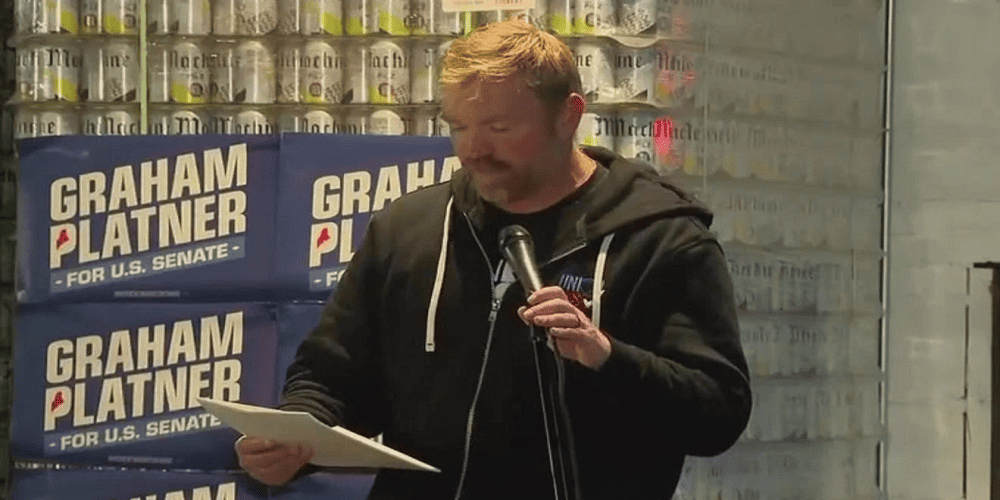
Graham Platner is emerging as one of the more intriguing political newcomers in the United States. He is a veteran, working‐class entrepreneur, and Senate candidate whose life trajectory and political platform reflect a mix of military service, small‐business experience, and populist messaging. In this “gluster” (a detailed, deep dive) we will explore his background, career, political campaign, policy positions, support and criticisms, and what his rise might mean in the broader context of American politics. We will also end with a section of FAQs to answer common questions about him.
Early Life & Background
Graham Platner was born in 1984 in Blue Hill, Maine, and raised in the coastal town of Sullivan, Maine. (Wikipedia) His upbringing in a small‐town, working‐class environment, near the water, shaped his later identity as an “oysterman” and fisherman, and contributed to his appeals to grassroots, working‐class voters.
Having completed high school, he enlisted in the United States Marine Corps in 2003 during the height of the Iraq War. (grahamforsenate.com) He later also served in the Maryland Army National Guard, including deployment to Afghanistan. (Wikipedia) After his service, he attended George Washington University on the GI Bill, though he withdrew and returned to Maine. (Wikipedia)
Upon returning to Maine, he became involved in aquaculture. Specifically, he took over operations of the Waukeag Neck Oyster Company (in Sorrento/Frenchman Bay region) and also worked as harbormaster of Sullivan, Maine. (Waukeag Neck Oyster Company)
So from the beginning we have a kind of combination: military veteran, small‐business owner (oyster farmer), local community official (harbormaster, planning board involvement) — all of which contribute to his “outsider‐but‐experienced” narrative.
Career & Community Involvement
Military Service
Platner’s military service is central to his public persona. He enlisted in the Marines right after high school, attended infantry training, and served in Iraq (including tours in Al Anbar Province, east of Fallujah) beginning around 2005. (grahamforsenate.com) Afterwards, he served in the Maryland Army National Guard and deployed to Afghanistan. (Wikipedia) He later worked as a security contractor in Kabul for about six months in 2018. (Wikipedia) His service, and his subsequent remarks expressing skepticism about the military‐industrial complex and private contractors, form part of his critique of the establishment. (The Guardian)
Oyster Farming & Local Business
After returning to Maine, Platner turned to oyster farming. He became co‐owner/operator of Waukeag Neck Oyster Company and emphasized sustainable, small‐scale aquaculture, rooted in his home region and community. (Waukeag Neck Oyster Company) He also served as the Sullivan, Maine harbormaster and chaired the town’s planning board. (grahamforsenate.com) This local involvement bolsters his image as someone invested in his community and grounded in real work, rather than simply being a career politician.
Entry into Politics
Platner's official entry into politics came in August 2025, when he announced his campaign as a Democrat for the U.S. Senate seat in Maine, currently held by five‐term Republican Susan Collins. (mainepublic.org) His launch video and campaign messaging emphasized a rejection of establishment politics, elite donors, and corporate power in favor of working‐class interests. (The Nation)
Political Campaign & Messaging
Launch and Momentum
Platner’s campaign officially launched on August 19, 2025. (mainepublic.org) The campaign video began with him chopping wood, working a boat, and declaring boldly:
“I’m not afraid to name an enemy. And the enemy is the oligarchy. It’s the billionaires who pay for it, and the politicians who sell us out.” (mainepublic.org)
In the first nine days, his campaign reported raising approximately US$1 million, with around 98 % of donations under US$100 and average donation around US$33. (Maine Morning Star) They also reported recruiting thousands of volunteers (2,700+ in those early days) for grassroots organizing. (Maine Morning Star)
His appeal has been framed around working‐class values, economic populism, anti‐establishment rhetoric, and reaching voters—especially working men—that the Democratic Party has struggled to keep. (The American Prospect)
Support and Endorsements
One of the high‐profile endorsements for Platner came from Bernie Sanders (Independent Vermont Senator) who rallied with Platner during his “Fight the Oligarchy” tour in Portland, Maine, and publicly endorsed him. (WMTW) The endorsement elevated Platner’s profile and brought increased national attention to his campaign.
Platform & Core Themes
Platner frames his campaign around structural economic change rather than incremental tweak. Some core themes include:
- Emphasis on the working class and economic populism: He argues that many working Americans feel ignored by both parties, believing the system is rigged. (The Guardian)
- Critique of corporate power, oligarchy, and “billionaire economy”: He specifically calls out concentration of wealth and power, and the influence of money in politics. (The Nation)
- Localism and small business: His own oyster farm serves as an example of small‐scale entrepreneurship and local value creation, which he contrasts with consolidation and large corporate dominion. (The American Prospect)
- Non‐traditional blend of issues: While leaning toward progressive stances (e.g., universal health care, housing affordability), he also embraces working‐class cultural issues (e.g., gun rights, rural values) and seeks appeal beyond typical Democratic bases. (Wikipedia)
- Foreign policy introspection: He has criticized endless wars, questioned the military‐industrial complex, but also expressed support for Ukraine and humanitarian efforts. (The American Prospect)
Campaign Challenges
While Platner’s campaign has gained momentum, there are inherent challenges. He is a political newcomer, competing against an entrenched incumbent in Susan Collins and within a crowded Democratic primary field. (BostonGlobe.com) Additional issues have arisen around past social media posts that he has since apologized for, and one controversial tattoo that resembled a Nazi symbol (which he said he plans to have removed). (Wikipedia)
Why His Candidacy Matters
For Maine Politics
Maine traditionally has had a moderate‐Republican senator in Susan Collins, and Democrats see this seat as a key pickup. Platner’s candidacy signals a shift: rather than fielding a conventional moderate or establishment Democrat, the party (or at least parts of it) may be betting on insurgent populist energy to win. As one analyst put it: the performance of Platner will be a bellwether for the future of the Democratic coalition. (The American Prospect)
For National Politics
Platner embodies the broader trend of “outsider” or insurgent candidates who draw upon working‐class roots, anti-establishment rhetoric, and a willingness to challenge their own party’s mainstream. His campaign may presage shifts in how Democrats think about candidate archetypes, messaging, and coalition building—especially with working‐class voters, rural constituencies, veterans, and men who feel alienated by standard liberal framing.
For Political Messaging & Strategy
His campaign highlights a few strategic lessons:
- Mediums of authenticity: Images of him on a boat, oyster farm, working local harbors generate a narrative of “real work” rather than polished politics.
- Populist framing: Naming “oligarchy” as the enemy rather than the opposing party alone expands the target and taps into broader frustration.
- Small‐dollar grassroots fundraising: The early fundraising numbers show success in raising many small donations rather than relying on big donors—thus aligning with his anti‐wealth‐influence message.
- Bridging culture & economics: By combining progressive economic policies with cultural conservatism (gun rights, rural values), he aims to reach a broader coalition.
Key Issues & Policy Positions
Here is an overview of where Platner stands, based on public statements and campaign materials:
Economy & Working Class
He emphasizes that Maine—and by extension America—has become unaffordable for many working people. His remedy: structural reforms that give power back to workers, local communities and small businesses. For example, he praises Maine’s lobster‐industry regulations (one‐boat, one‐captain, one‐license) that prevent consolidation, using it as a model. (The American Prospect)
Healthcare
Platner supports universal health care, described in his campaign materials and media coverage as “Medicare for All” or equivalent. (Wikipedia)
Housing & Affordability
He frequently mentions housing affordability as a key issue in Maine, along with rising costs and stagnating wages. His critique ties housing challenges to broader economic concentration and oligarchic influence. (grahamforsenate.com)
Guns and Rural Values
Uniquely for a Democrat, Platner emphasizes an understanding of gun rights and rural culture. He recognizes the importance of firearms in Maine’s hunting and rural communities and supports measures like red‐flag laws, provided they don’t unduly restrict legal gun ownership. (Wikipedia)
Foreign Policy & War
He has voiced skepticism about ongoing wars, the costs of the military‐industrial complex, and the role of private defense contractors. At the same time, he supports Ukraine’s resistance to invasion and U.S. humanitarian/development assistance abroad, though he argues the U.S. must invest more at home. (The American Prospect)
Social & Civil Rights
Platner has affirmed support for LGBTQ+ rights and reproductive rights. He has said he “stands right in the way” of anyone who would undermine those freedoms. (Wikipedia) On immigration, he adopts a hybrid approach: support for strong border security, opposition to mass deportation, and a pathway to citizenship. (The American Prospect)
Strengths & Potential Advantages
- Authenticity and narrative: A military veteran turned oyster farmer challenging an incumbent senator gives a compelling storyline.
- Grassroots fundraising: Early data show many small donations, which aligns with his identity and may help build momentum without being beholden to big donors.
- Cross‐cutting appeal: He may appeal not only to liberal Democrats but also to independent voters, veterans, working‐class men, rural voters who feel alienated.
- Timing: With the seat held by a Republican (Susan Collins) and Democrats anxious to flip it, Platner’s insurgent candidacy taps into that urgency.
- Endorsement momentum: The endorsement from Bernie Sanders and others gives him national attention and sometimes fundraising lift.
Challenges & Risks
- Inexperience: Platner has no previous electoral office experience; opponents may portray this as a weakness.
- Establishment resistance: The Democratic Party establishment might favor a more conventional candidate, which could lead to intra‐party conflict or limited institutional support. As noted in analyses, his candidacy is being watched as a litmus test for the party’s direction. (The American Prospect)
- Opponent strength: Senator Susan Collins, though less popular than before, is a known quantity in Maine with years of political experience and fundraising advantage.
- Controversies: Past social media posts, tattoos, remarks could become liabilities in the general election or primary. For example, his tattoo that resembled a Nazi symbol (which he says he will remove) has drawn negative attention. (Wikipedia)
- Message clarity: While his populist framing resonates with some, translating that into detailed policy and reassuring voters about governance may be challenging. Some analyses caution that identity and authenticity alone might not suffice without clear focus on voters’ top concerns—e.g., inflation, jobs, cost of living. (BostonGlobe.com)
What to Watch
- Primary dynamics: How does Platner fare against other Democratic candidates (if there is a crowded primary)? Will party insiders back him or favor another candidate?
- Fundraising and campaign infrastructure: Will his early grassroots momentum translate into sustained fundraising, paid staff, field operations across Maine?
- General election viability: Can he expand beyond his base and win over independent and moderate voters in Maine? How will he perform in debates? How will Collins attack him?
- Media and messaging: As he becomes more visible, will scrutiny of his past increase? Will his outsider image hold up in the glare of national media?
- Policy detail and governance message: Will he move from insurgent rhetoric to governing vision, and will that appeal to many moderate voters?
- Party backing: Whether the national Democratic apparatus embraces or resists him will have implications beyond Maine for party strategy and candidate model.
- Impact on broader Democratic strategy: If Platner or someone like him succeeds, it might signal a shift in how the Democratic Party fields candidates—less establishment, more working‐class/populist, more hybrid messaging.
Broader Context and Implications
Graham Platner is part of a broader wave of candidates who challenge conventional partisan categories. In the American Prospect’s words, he is “part of a growing wave of populist Senate candidates who are challenging modern understandings of political labels by forefronting anti‐establishment, anti‐corporate, and distinctly localist politics and policies.” (The American Prospect)
The significance is two‐fold:
- For Democrats: The party has long struggled with its identity—how to be both socially progressive and economically populist while holding onto working‐class voters (especially men and rural voters). Platner offers a test case in that challenge. Some analysts argue that to win back these voters, Democrats may have to stop relying solely on identity politics and instead focus more intently on pocketbook issues, authenticity, and real economic narratives. (BostonGlobe.com)
- For American politics generally: The rise of outsider candidates, the appeal of “working man” narratives, and the critique of elite/corporate power transcend party lines. Platner’s campaign reflects how the barrier between traditional left and right is sometimes reconfigured when economic‐class consciousness rises. He also shows how veterans and small‐business owners can position themselves as credible outsiders while still having real experience.
Additionally, the race for Maine’s U.S. Senate seat is not just local; it has national implications because flipping that seat could shift the balance of power in the U.S. Senate. Thus, how this race unfolds could influence strategic decisions in other states about candidate selection, messaging, and coalition‐building.
Summary
Graham Platner’s profile is unusual and captivating: veteran + oyster farmer + small‐town harbormaster + insurgent Senate candidate. His campaign taps into broad frustrations—economic inequality, political elitism, corporate power—and attempts to build a bridge between working‐class voters and the Democratic Party. The early fundraising success and national endorsements point to momentum, but significant challenges remain: institutional support, campaign infrastructure, message refinement, opponent strength, and media scrutiny.
If he succeeds, his candidacy could reshape how Democrats think about candidate profiles and strategies. If he fails, his campaign might still leave a lasting imprint by nudging the party or future candidates to rethink conventions.
Frequently Asked Questions (FAQs)
Q1: Who is Graham Platner and what is his background?
A1: Graham Platner was born in 1984 in Blue Hill, Maine, and raised in Sullivan, Maine. He served in the U.S. Marine Corps (deployed to Iraq) and later in the Maryland Army National Guard (deployed to Afghanistan). After his service, he attended George Washington University on the GI Bill but returned to Maine and became involved in oyster farming (Waukeag Neck Oyster Company) and local community service (harbormaster, planning board). He is running as a Democrat for the U.S. Senate seat in Maine, seeking to unseat Senator Susan Collins. (Wikipedia)
Q2: What is his political campaign about?
A2: His campaign emphasises economic populism, working‐class interests, and anti‐establishment messaging. He frames the “enemy” as the oligarchy—billionaires, corporate power, and political elites. He emphasises local business (his own oyster farm), housing affordability, healthcare reform, and the idea of returning power to working people. He positions himself as a fresh alternative to establishment candidates. (The Nation)
Q3: What are his key policy positions?
A3: Some of his key positions include: support for universal healthcare (Medicare for All style), housing affordability reforms, economic policies to benefit small business and working‐class communities, gun rights aligned with rural values (while supporting red‐flag laws), support for LGBTQ+ rights and reproductive rights, immigration policy with security plus pathway to citizenship, critical stance on endless wars and military contracting while still supporting humanitarian aid/Ukraine. (Wikipedia)
Q4: What makes his candidacy different from other Democratic candidates?
A4: Several things stand out:
- His working‐class background (oyster farmer) rather than political pedigree.
- His military veteran experience, lending credibility on defense and veteran issues.
- His anti‐establishment framing, explicitly targeting wealthy elites and the “billionaire economy.”
- His attempt to bridge liberal economic policies with rural, cultural, even gun‐rights friendly messaging — aiming to reach voters beyond the usual Democratic coalition. (The American Prospect)
Q5: What endorsements has he received and what is his fundraising like?
A5: He received endorsement from Senator Bernie Sanders, who rallied with him in Maine and used him as part of his “Fight the Oligarchy” tour. (WMTW) In his first nine days after launching his campaign, he raised around US$1 million, with the vast majority of donations under US$100 and an average donation of around US$33. (Maine Morning Star)
Q6: What are his main challenges?
A6: His challenges include: being an electoral novice running against an entrenched incumbent (Susan Collins), limited institutional support (compared to establishment candidates), the need to build a statewide campaign infrastructure, possible negative scrutiny over past social media posts or personal issues (for example a tattoo resembling Nazi symbol), and the need to translate insurgent momentum into concrete voter support across Maine’s diverse electorate. (BostonGlobe.com)
Q7: Why is this Senate race important?
A7: The seat held by Senator Susan Collins is critically important to Democrats as they seek to flip control of the U.S. Senate. Eight years or more of Collins’s incumbency has made her a formidable opponent. A successful campaign by Platner or any Democrat could shift the balance of power. Additionally, the race is seen as a test for Democratic strategy — whether insurgent, populist, working‐class rooted candidates can succeed. (The American Prospect)
Q8: What is his appeal to voters outside the typical Democratic base?
A8: Platner’s appeal beyond the typical Democratic base includes:
- His veteran credentials which may resonate with independent voters and veterans.
- His small‐business/working‐class background appealing to rural voters and non‐college educated voters.
- His willingness to address gun rights and rural culture, which many Democrats shy away from.
- His populist messaging that frames politics as a struggle between working people versus elites, which can transcend traditional partisan divides. (The American Prospect)
Q9: What risks does he face if he becomes more visible nationally?
A9: As his profile increases, the risks include heavier media scrutiny of his past posts, remarks, or associations; potential conflicts between his populist rhetoric and establishment realities of running a major campaign; the need to articulate detailed policy positions (not just thematic slogans); and the possibility that opponents will portray him as too radical or too inexperienced. The tattoo controversy is one example. (The Guardian)
Q10: If he were to win, what might change?
A10: If Platner were to win, several implications could follow:
- Maine’s representation in the U.S. Senate would shift from a moderate Republican to a populist‐oriented Democrat—potentially altering Maine’s influence and policy orientation.
- The Democratic Party might gain confidence in non‐traditional candidates (veterans, small‐business owners, populists) rather than only career politicians.
- It might signal a shift in how working‐class voters are addressed by major parties, with greater emphasis on authenticity, economic structural change, and non‐elitist messaging.
- More broadly, it might add to momentum for a progressive/populist movement within American politics, challenging both corporate influence and the status quo of both parties.
Concluding Thoughts
Graham Platner is not your typical candidate. His life—from military service to oyster farming to a Senate run—is an unusual path that carries strong narrative appeal. His campaign taps into real frustrations among working‐class and rural voters who feel ignored or left behind. His messaging rejects establishment politics and corporate power, and his early fundraising success suggests there is appetite for his brand of politics.
That said, a compelling narrative is only part of the equation. Winning a statewide Senate race requires deep resources, organization, message discipline, broad coalition building, and the ability to withstand intense scrutiny. The fact that he has no prior elected office is a risk some will highlight. Additionally, his insurgent style might appeal to some voters but alienate others who prefer stability, proven experience, or moderate positioning.
Ultimately, whether Graham Platner will succeed in his bid remains to be seen. But regardless of the outcome, his candidacy offers a case study in how American politics may be shifting: toward outsiders, populists, and working‐class narratives, rather than solely toward conventionally groomed politicians. For Maine and for the Democratic Party, his campaign is a space to watch.
Leave A Comment
0 Comment