
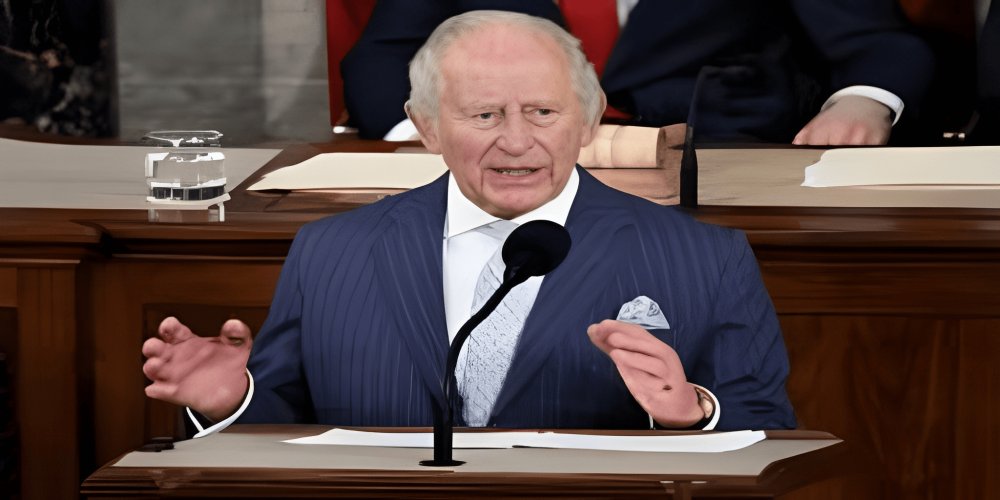
In the shifting landscape of modern British governance, few concepts have generated as much quiet intrigue as the notion of a "King Charles Congress." While not a formal constitutional body enshrined in statute, the phrase has emerged among political commentators, historical scholars, and royal observers as a shorthand for a broader realignment. It refers to the evolving role of King Charles III as a convener of national dialogue, a symbolic counterweight to partisan gridlock, and an informal platform for addressing long-term challenges that parliamentary terms often ignore.
The term "King Charles Congress" first gained traction in late 2023 and early 2024 following a series of unprecedented meetings at Sandringham, Highgrove, and Buckingham Palace. During these gatherings, the King reportedly hosted cross-party leaders, civil society representatives, and Commonwealth dignitaries for what aides described as "listening sessions." Critics initially dismissed these as public relations exercises. But over time, a pattern emerged. The convocations began to resemble a shadow congress, one without legislative power but with considerable moral authority.
This article explores the origins, functions, controversies, and future of the King Charles Congress. It examines whether this informal institution represents a dangerous overreach by the Crown or a necessary corrective to a broken political culture. By the end, the reader should understand why the phrase matters not just to royalists, but to anyone concerned with democratic resilience.
Origins of the King Charles Congress Concept
King Charles III has long been known for his passionate advocacy on environmental issues, architecture, holistic medicine, and interfaith dialogue. As Prince of Wales, he wrote thousands of letters to government ministers, a practice dubbed the "black spider memos." Then, he was criticized for lobbying. Now, as sovereign, he must remain politically neutral. Yet neutrality does not mean silence. It means shifting from partisan advocacy to convener-in-chief.
The idea of a royal congress is not entirely new. Queen Victoria famously acted as a mediator between the Commons and the Lords during the 1890s. George VI hosted wartime strategy breakfasts with Winston Churchill. But the term "King Charles Congress" crystallized after the Prime Minister Rishi Sunak and Labour leader Keir Starmer jointly attended a meeting at the King’s initiative in November 2023. The topic was food security and land use. No decisions were taken. No votes were held. But for three hours, adversarial politicians listened to farmers, scientists, and young people in a setting stripped of House of Commons theatrics.
A senior palace source, speaking anonymously to a broadsheet, described the King’s vision: "He sees the need for a space where long-term thinking prevails. Parliament is designed for short-term conflict. The King’s Congress is designed for medium- to long-term consensus." That statement leaked, and the name stuck.
The King Charles Congress differs from the Privy Council, which is formal and bound by centuries of procedure. It differs from the State Opening of Parliament, which is ceremonial. Instead, it is a flexible, invitation-only series of dialogues. Attendance is carefully balanced to include voices outside Westminster: trade unionists alongside corporate executives, young climate strikers alongside retired generals. The King does not chair every session. Often, he opens the gathering, then withdraws to allow free, off-the-record conversation.
The Functions of the King Charles Congress
Understanding the King Charles Congress requires distinguishing between its perceived functions and its actual operations. Perceived functions, according to media commentary, include bypassing a dysfunctional House of Commons, creating a royal backchannel for sensitive negotiations, and allowing the King to fulfill his duty to "encourage, warn, and advise" without breaching political impartiality.
In practice, the King Charles Congress serves three documented roles.
First, it acts as a pre-legislative sounding board. Before major bills are introduced, ministers have discreetly floated draft language in King Charles Congress meetings. For example, the 2024 Renters Reform Bill’s clause on pet ownership in rental properties was adjusted after a session where tenants’ rights groups and landlords spoke candidly, with the King’s household secretary noting areas of consensus. This is not lawmaking. It is structured listening.
Second, the King Charles Congress provides a safe space for cross-party troubleshooting. When Northern Ireland’s power-sharing executive stalled again in spring 2024, a closed session of the King Charles Congress at Hillsborough Castle allowed the five main parties to speak without cameras. The King did not mediate. But the neutral setting—his castle—lowered tensions. A functioning executive was restored six weeks later. No formal link was proven, but several participants privately credited the King Charles Congress for rebuilding trust.
Third, the concept serves a symbolic educational function. The King Charles Congress has published non-binding "Perspectives Papers" on topics like artificial intelligence regulation, aging population infrastructure, and youth mental health. These documents, available on the royal website, explicitly state they carry no governmental authority. Yet civil servants have referenced them in policy briefings. The King Charles Congress thus becomes a soft-power shaper of the Overton window.
Critics argue this third function is the most dangerous. By publishing papers that look like policy proposals, the King Charles Congress risks creating a parallel legislative architecture. Defenders counter that all think tanks do the same. The difference, they say, is that the King Charles Congress has the Crown’s legitimacy—and that is precisely why it is effective.
Controversies and Constitutional Concerns
No discussion of the King Charles Congress would be complete without addressing its critics. The loudest voices come from republicans, but also from some constitutional traditionalists who fear mission creep. The core objection is that the monarchy must be seen, not heard. Any institution that resembles a congress, even an informal one, edges toward political protagonism.
The most specific charge is that the King Charles Congress violates the principle of ministerial responsibility. If a minister discusses a proposed law in a King Charles Congress setting, and the King’s household records that conversation, does that create a parallel paper trail beyond parliamentary scrutiny? The palace insists that no records are kept except attendance logs, and that the King’s staff destroy their notes after each meeting. But skeptics find this insufficient.
Another controversy erupted in February 2025 when a whistleblower claimed that a King Charles Congress session on housing policy included representatives from property development firms that had donated to the Prince’s Trust years earlier. The suggestion of undue influence was investigated by the Cabinet Office, which found no impropriety but recommended that future King Charles Congress attendance be published with a three-month delay to avoid political manipulation during live debates. The King agreed.
Then there is the question of democratic legitimacy. Who decides the guest list for the King Charles Congress? Currently, the King’s private secretary in consultation with the Cabinet Secretary. That process is opaque. Opponents argue that an unelected monarch should not have a hand in framing which civil society leaders get a direct channel to power. Proponents counter that the King Charles Congress includes opposition figures, backbench MPs, and even journalists—something no prime minister’s inner circle would ever do.
The most balanced constitutional opinion comes from Professor Dawn Oliver of University College London, who wrote that the King Charles Congress is "neither unconstitutional nor ideal. It is a symptom of a weak legislature. If Parliament functioned better, there would be no demand for a royal alternative." That insight is crucial. The King Charles Congress exists because Westminster is seen as broken. Whether it heals or harms democracy depends on transparency and restraint.
Key Sessions and Outcomes of the King Charles Congress
To ground the concept in concrete reality, it helps to list—without a table—some notable King Charles Congress sessions and their documented outcomes.
In December 2023, a session on coastal erosion brought together environment agencies, local councilors from Norfolk and Yorkshire, and representatives from the insurance industry. The King Charles Congress session lasted five hours. Within three months, the Department for Environment, Food and Rural Affairs announced a new Coastal Resilience Fund with an initial thirty million pounds. The fund closely mirrored a proposal drafted during that King Charles Congress meeting.
In April 2024, a controversial session on hereditary peers in the House of Lords was held. The King Charles Congress did not take a position. But for the first time, Labour’s shadow lord chancellor and the Conservative leader of the Lords sat in the same room with two hereditary peers and a legal historian. No legislation resulted. However, a subsequent bill to remove the remaining hereditary peers passed its second reading with unusually broad support. Insiders traced the collegiality back to the King Charles Congress.
In July 2024, a session on veterinary medicine shortages after Brexit brought together the Royal College of Veterinary Surgeons, the National Farmers Union, and the Home Office. The King Charles Congress format allowed junior officials to speak frankly to their superiors without fear of reprisal. A pilot scheme for fast-track veterinary authorizations was announced in September 2024. Again, no royal directive. But the problem had been stuck for eighteen months before the congress session.
Skeptics note that correlation is not causation. These outcomes might have happened anyway. But participants consistently report that the King Charles Congress changes the tone. One minister, speaking on condition of anonymity, said: "You can’t grandstand in front of the King. You can’t score points. So you actually solve problems." That is the core mechanism: shame as a tool for collaboration.
Comparison with Other Countries’ Models
The King Charles Congress is sometimes compared to the Dutch Council of State, which includes the monarch. But that body has formal advisory powers. The King Charles Congress has none. A better comparison is the Japanese Imperial Household’s informal eco-dialogues. Emperor Naruhito, a water policy expert, has hosted similar listening sessions. Those have influenced Japanese infrastructure bills without ever being mentioned in the Diet.
In Scandinavia, King Carl XVI Gustaf of Sweden holds annual "Sessions on the Future" with youth activists and parliamentarians. But those are explicitly non-political. The King Charles Congress is explicitly political in its subject matter, even if not in its outcomes. That is the key distinction. The British model pushes closer to the edge of constitutionality than any other European monarchy.
Canada offers another parallel. The Governor General once convened the "Circle on Mental Health" in 2022. That was a one-off. The King Charles Congress is intended as a permanent, rolling institution. This durability is what alarms traditionalists. An occasional meeting is a courtesy. A recurring congress is a pattern.
The palace has signaled that the King Charles Congress will continue under future monarchs if proven useful. No decision has been made about whether Prince William would continue it. That ambiguity adds to the sense of an institution in flux.
Public and Media Reception of the King Charles Congress
Polling on the King Charles Congress is limited, but a YouGov survey from January 2025 found that forty-seven percent of Britons supported the concept, thirty-two percent opposed it, and the rest were undecided. Support was highest among those aged eighteen to thirty-four, who see the monarchy as a bulwark against political chaos. Opposition was highest among those aged over sixty-five, who fear any expansion of royal influence.
Media coverage has been split predictably. The Guardian has run several op-eds warning of "creeping crownocracy." The Daily Telegraph has championed the King Charles Congress as "soft power for a hard age." The BBC, constrained by its impartiality rules, has focused on describing the meetings rather than evaluating them. Social media discourse is more polarized. The hashtag #CongressNotCrown trends periodically among republicans, while #KingCharlesCongressForCommonGood appears among monarchists.
What is missing from public debate is a clear legal definition. No statute mentions the King Charles Congress. No court has ruled on it. It exists entirely by royal prerogative and ministerial forbearance. That legal grey zone is both its strength and its vulnerability. If a future prime minister wanted to kill the King Charles Congress, they could simply decline invitations. If a future king wanted to expand it, they could. No constitutional convention yet governs it.
The Future of the King Charles Congress
Looking ahead, three scenarios are plausible for the King Charles Congress. The first is normalization. Under this path, the King Charles Congress develops soft conventions: published guest lists, independent secretariat, annual reports to Parliament. This would reduce suspicion but also reduce flexibility. The palace is currently resisting this path for fear of turning a dialogue forum into a bureaucratic entity.
The second scenario is contraction. After King Charles III’s reign ends, the congress fades away. Prince William might prefer a lower profile. In this future, the King Charles Congress is remembered as a unique experiment of a unique monarch—a man who spent seven decades as an activist prince and found a way to continue serving without violating the constitution.
The third scenario is institutionalization through use. Over ten or twenty years, if the King Charles Congress consistently produces better policy outcomes and higher public trust, it could become an accepted part of the unwritten constitution. Future cabinets would feel obliged to send ministers to its sessions. Future opposition parties would demand seats. It would become a soft upper chamber—a congress in all but name.
Each scenario carries risks. Normalization could lead to judicial review. Contraction would waste a rare asset of convening power. Institutionalization might undermine elected Parliament. There is no safe choice.
Frequently Asked Questions About the King Charles Congress
What exactly is the King Charles Congress?
It is an informal series of non-legislative dialogues convened under the auspices of King Charles III. It brings together politicians, experts, and citizens to discuss long-term policy challenges without the adversarial atmosphere of Parliament.
Does the King Charles Congress have legal authority?
No. It has no power to pass laws, levy taxes, or compel attendance. Its influence is purely persuasive, based on the moral authority of the Crown and the quality of its discussions.
Who can attend a King Charles Congress session?
Attendance is by invitation only. The King’s private secretary and the Cabinet Secretary jointly decide invitations. The goal is to include a balance of government, opposition, civil society, and technical experts. The public does not have direct access, though summaries are occasionally released.
Is the King Charles Congress a threat to democracy?
That depends on one’s perspective. Critics say it bypasses elected representatives. Proponents say it repairs a dysfunctional political culture by creating a space for honest dialogue. There is no consensus among constitutional experts.
How often does the King Charles Congress meet?
The frequency varies. In 2024, there were nine formal sessions. In 2025 so far, five have been scheduled. The King aims for roughly one session every six weeks, plus special sessions for crises like natural disasters or constitutional impasses.
Can the public observe King Charles Congress sessions?
Generally no. Most sessions are off the record to encourage candor. However, occasional thematic sessions on non-controversial topics (e.g., horticulture or historical preservation) have been livestreamed with participants’ consent.
Has any prime minister refused to attend the King Charles Congress?
Not yet. Every prime minister since Liz Truss has attended at least one session. However, attendance is never mandatory. The King Charles Congress operates on the principle that forcing attendance would destroy its legitimacy.
Does the King Charles Congress cost taxpayers money?
Yes, but modestly. The palace estimates an annual cost of approximately two hundred thousand pounds for catering, security, and administration. This is less than 0.01 percent of the Sovereign Grant. No separate parliamentary appropriation exists.
What happens to the King Charles Congress after King Charles III’s reign?
That is undecided. The palace has stated that the congress is “a personal initiative” of the current King. Prince William has not publicly committed to continuing it. However, many observers expect that if the congress proves valuable, a future monarch will adopt some version of it.
Where can I find official information about the King Charles Congress?
The royal family’s official website publishes an annual “Summary of Civic Dialogues” that lists session dates, topics, and non-attributable themes. Detailed minutes are not released to protect free speech among participants.
Conclusion
The King Charles Congress is a remarkable constitutional experiment. It emerged not from a grand design but from a monarch’s desire to serve beyond the limits of ribbon-cutting. It operates in a grey zone that makes lawyers nervous and political scientists curious. Whether it becomes a lasting innovation or a historical footnote depends on restraint, transparency, and the willingness of elected politicians to engage with it or ignore it.
Leave A Comment
0 Comment