
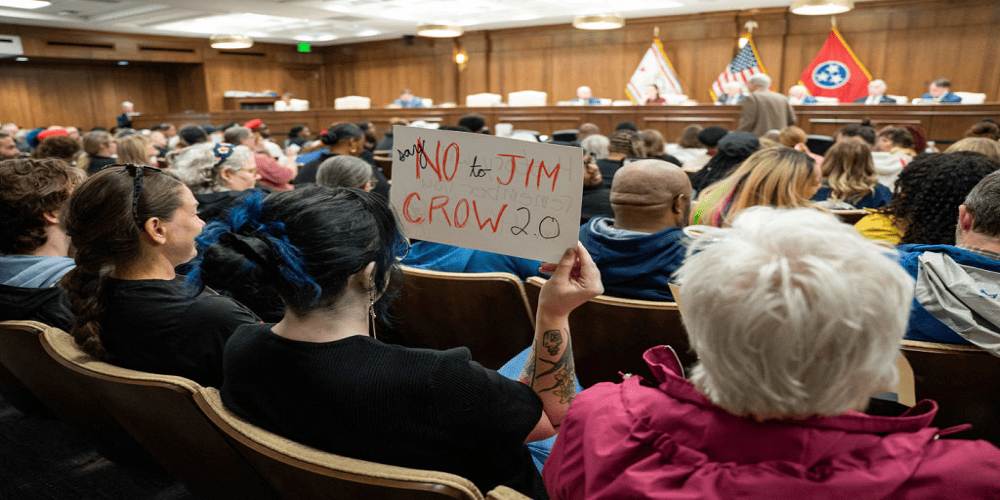
The process of drawing electoral maps is seldom simple, but in the American South, it carries a weight of history that transforms administrative procedure into high-stakes political warfare. Southern state redistricting efforts have become a defining feature of the region’s political identity, shaping everything from congressional majorities to local school board control. Over the past decade, these efforts have intensified, fueled by population shifts, legal challenges under the Voting Rights Act, and a deepening partisan divide. Understanding how southern states redraw their legislative lines is not merely an exercise in civics; it is a window into the struggle for representation in a rapidly changing part of the country.
The core of any discussion on southern state redistricting efforts begins with the decennial census. Every ten years, the U.S. Census Bureau provides population data that mandates the reconfiguration of voting districts to ensure equal representation. For southern states like Texas, Georgia, Florida, North Carolina, South Carolina, and Alabama, this task is monumental. The South has experienced explosive population growth, particularly among Hispanic, Asian, and Black communities. Between 2010 and 2020, Texas alone gained nearly four million new residents, earning two additional congressional seats. Florida added two seats as well, while North Carolina and Georgia each gained one. This demographic dynamism means that southern state redistricting efforts are not just about adjusting lines but about creating entirely new districts, each with the potential to flip political control.
Unlike in other regions where population is stagnant or declining, southern states face the unique challenge of accommodating growth while adhering to the federal Voting Rights Act of 1965. Section 2 of the Act prohibits redistricting plans that dilute minority voting strength. Consequently, southern state redistricting efforts are frequently scrutinized for whether they create majority-minority districts—districts where a racial minority group comprises a majority of eligible voters. Proponents argue such districts are necessary to prevent vote dilution; opponents contend they constitute racial gerrymandering. This tension forms the central conflict of nearly every redistricting cycle in the South.
The mechanics of drawing maps vary from state to state. In most southern states, the state legislature holds primary responsibility for redistricting. The governor typically possesses veto power, but in states like North Carolina and Georgia, the legislature can override a veto with a simple majority. In some states, such as Virginia prior to 2020, redistricting was entirely legislative. However, Virginia voters approved a constitutional amendment creating a bipartisan redistricting commission, a rare reform in a region where partisan control is paramount. Meanwhile, Florida’s constitution prohibits drawing districts with the intent to favor or disfavor an incumbent or party, a restriction known as the Fair Districts amendment. Even with such rules, southern state redistricting efforts have repeatedly ended up in court.
Take Texas as the primary case study. Following the 2020 census, the Republican-controlled legislature drew maps that solidified GOP advantages in the state’s growing suburbs. Critics alleged that the new congressional map reduced the number of districts where Hispanic and Black voters could elect their preferred candidates, even as people of color accounted for 95% of the state’s growth. Lawsuits were filed immediately, claiming that these southern state redistricting efforts violated Section 2 of the Voting Rights Act. The US Department of Justice under the Biden administration joined a suit against Texas, arguing that the maps discriminated against minority voters. The legal battle continues, illustrating how southern state redistricting efforts can drag on for years, sometimes until the eve of the next election.
Georgia presents another instructive example. After the 2020 census, Georgia’s Republican-led General Assembly drew maps that weakened Democratic strongholds in the Atlanta suburbs. The state’s population growth was overwhelmingly driven by people of color, yet the new maps did not create an additional majority-Black congressional district. In October 2023, a federal judge ruled that Georgia’s congressional, state Senate, and state House maps all violated the Voting Rights Act. The judge ordered the state to draw an additional Black-majority congressional district—not just a district with a plurality of Black voters, but one where Black voters have a realistic opportunity to elect a candidate of their choice. Georgia’s appeal to the Eleventh Circuit Court of Appeals is ongoing, but the ruling sent a clear signal: southern state redistricting efforts must be responsive not just to raw population data but to historical patterns of racial polarization in voting.
North Carolina’s redistricting history is perhaps the most tortured in the South. For nearly a decade, the state has cycled through maps drawn by Republican legislatures, struck down by state and federal courts for illegal partisan gerrymandering, and then redrawn. The state’s supreme court initially struck down a 2021 map as an extreme partisan gerrymander under the state constitution. However, after the 2022 election flipped the court to a Republican majority, the new justices reversed that precedent, allowing a 2023 map that heavily favors Republicans. This whiplash underscores a critical lesson: southern state redistricting efforts are as much about judicial composition as they are about geography. Where the federal courts have stepped back—most notably after the US Supreme Court’s 2019 ruling in Rucho v. Common Cause that partisan gerrymandering claims are non-justiciable in federal court—state courts have become the primary battleground. But when state courts themselves are subject to partisan elections, as they are in North Carolina and most southern states, the result is a chaotic, ever-shifting legal landscape.
Alabama’s recent redistricting saga has drawn national attention. After the 2020 census, Alabama had seven congressional districts, only one of which was a majority-Black district, despite Black residents comprising 27% of the state’s population. A group of plaintiffs challenged the map, arguing that the state should have two majority-Black districts or something close to it. The US Supreme Court, in a surprise June 2023 decision in Allen v. Milligan, upheld a lower court’s ruling that Alabama’s map likely violated Section 2 of the Voting Rights Act. Chief Justice John Roberts wrote the majority opinion, affirming that the Act still requires states to draw districts where minority voters have the opportunity to elect their preferred candidates. Alabama’s legislature defied the court’s order twice, leading to a special master being appointed to draw a new map that created a second majority-Black district. This episode demonstrated that southern state redistricting efforts cannot simply ignore federal judicial authority, even when the Supreme Court has become more conservative.
Florida’s process under Governor Ron DeSantis has been equally contentious. After the 2020 census, DeSantis took the unusual step of proposing his own congressional map, bypassing the legislature. His map eliminated one of the state’s majority-Black districts in North Florida, which had been represented by Democrat Al Lawson for decades. DeSantis argued that the district was an unconstitutional racial gerrymander because it stretched across multiple counties to connect disparate Black populations. Plaintiffs countered that destroying the district diluted Black voting strength in violation of the Fair Districts amendment and the Voting Rights Act. A state court initially struck down DeSantis’s map, but an appellate court reinstated it, and the Florida Supreme Court declined to intervene ahead of the 2022 election. The result was a net gain of four Republican seats in Florida’s congressional delegation. The legal arguments in Florida highlight a recurring theme: southern state redistricting efforts often present a clash between competing interpretations of anti-discrimination law. One reading says race cannot be the predominant factor in drawing lines; another says race must be considered to prevent vote dilution. The courts have yet to settle this contradiction.
South Carolina, while smaller, offers a narrow but important case. The state’s Republican-controlled legislature redrew the coastal First Congressional District to move about 30,000 Black voters out of the district, turning a competitive seat into a safe Republican one. A federal district court found that the map was an unconstitutional racial gerrymander, but the U.S. Supreme Court heard the case in 2024. The justices appeared divided, with some questioning whether the state had a legitimate partisan motive rather than a racial one. The final ruling, expected in 2025, will set a national precedent for how to distinguish between racial and political gerrymandering. This distinction is crucial because while racial gerrymandering is illegal, partisan gerrymandering is currently permissible under federal law. Therefore, savvy map drawers in southern state redistricting efforts often argue that their lines are driven by partisan advantage, not race, even when the effects are racially predictable.
Beyond the courtroom, technology has dramatically changed southern state redistricting efforts. In the past, maps were drawn with paper and pencil, limited by the mapmakers’ local knowledge. Today, sophisticated geographic information system software allows legislators to slice precincts into smaller and smaller pieces, a practice known as “cracking” when it dilutes minority voting power. “Packing” is the opposite: concentrating minority voters into a single district to reduce their influence elsewhere. The precision of modern redistricting means that southern state redistricting efforts can produce outcomes with mathematical certainty, which is why groups like the Southern Coalition for Social Justice and the American Civil Liberties Union now use the same software to identify suspected racial gerrymanders. The battle has become a data war, fought over turnout models, cross-over voting patterns, and racially polarized voting statistics.
Public participation in southern state redistricting efforts has grown but remains uneven. Most state legislatures hold public hearings, but critics argue these are often pro forma, scheduled at inconvenient times in locations far from minority communities. In response, nonpartisan organizations have developed online mapping tools that allow citizens to submit their own district plans. During the post-2020 cycle, Georgia received over 2,000 public map submissions, though the legislature adopted none of them intact. Tennessee and Louisiana, by contrast, held fewer public hearings and provided less access to draft maps before voting on them. Transparency advocates argue that southern state redistricting efforts would be fairer if conducted by independent commissions, as in California and Michigan. However, efforts to establish such commissions in southern states have repeatedly failed. Proposed constitutional amendments in Texas and North Carolina went nowhere, while Florida’s commission model was effectively overridden by the governor’s direct involvement.
The consequences of southern state redistricting efforts extend far beyond the politicians themselves. For ordinary voters, the configuration of their district determines whether their vote feels meaningful or wasted. A safe district encourages turnout only in primaries and often produces extreme candidates. A competitive district encourages moderation, cross-party appeals, and higher general election turnout. In the South, the number of truly competitive districts has fallen dramatically. In 2020, only about 10% of congressional districts in the South were decided by margins under five percentage points. By 2024, after the new maps were implemented, that number fell to under 5%. This lack of competition feeds political polarization and reduces voter engagement. When voters believe the outcome is predetermined, they stay home. Therefore, the way southern state redistricting efforts resolve will have a direct impact on the health of regional democracy.
Looking ahead, the 2030 census will bring a new round of southern state redistricting efforts. Demographic projections show that the South will continue to diversify, with non-Hispanic white population growth slowing or reversing in many areas. If current trends hold, states like Georgia, Texas, and North Carolina will need to draw more districts where voters of color can elect candidates of their choice just to comply with the Voting Rights Act. However, federal law remains ambiguous. The Supreme Court’s 2023 decision in Allen v. Milligan protected Section 2 but did not expand it. Meanwhile, a pending case called Moore v. Harper, about whether state legislatures have unchecked authority over federal elections, could further destabilize the redistricting process. If the independent state legislature theory gains traction, state courts could be stripped of their power to review redistricting maps. That would leave southern state redistricting efforts subject only to the federal judiciary, which has shown increasing reluctance to intervene.
Frequently Asked Questions
Q1: Why are southern state redistricting efforts more controversial than in other parts of the country?
A1: Southern state redistricting efforts are more controversial due to a combination of rapid population growth, racial diversity, and a deep history of voting rights litigation. The South has the highest concentration of Black voters in the country, and the Voting Rights Act imposes specific obligations to prevent minority vote dilution. Additionally, many southern states have single-party control of the redistricting process, leading to aggressive partisan gerrymandering that is quickly challenged in court. No other region combines these factors as intensely.
Q2: How often do southern state redistricting efforts occur?
A2: They occur once every ten years, following the release of U.S. Census population data. The primary cycle occurs in the year ending with “1,” such as 2021 and 2031. However, due to legal challenges or court-ordered redraws, southern state redistricting efforts can extend into the middle of the decade. For example, Alabama was still redrawing maps in late 2023 and early 2024 due to Supreme Court intervention.
Q3: What is the difference between redistricting and gerrymandering?
A3: Redistricting is the neutral process of adjusting district boundaries to reflect population changes. Gerrymandering is the manipulation of those boundaries for an unfair advantage, either partisan (helping a political party) or racial (diluting minority voting power). Southern state redistricting efforts become gerrymandering when map drawers intentionally crack or pack voters to achieve a predictable electoral outcome that does not reflect the natural distribution of the population.
Q4: Can citizens influence southern state redistricting efforts directly?
A4: Yes, but the degree of influence varies by state. Most southern states hold public hearings where citizens can testify. Some states, like Georgia and North Carolina, allow citizens to submit their own proposed maps using online tools. However, no southern state currently has a fully independent redistricting commission that removes map-drawing authority from elected officials. As a result, citizen input is often advisory rather than binding. The most effective influence typically comes through lawsuits filed by civil rights organizations.
Q5: What is the role of the Voting Rights Act in southern state redistricting efforts?
A5: The Voting Rights Act of 1965, particularly Section 2, is the central legal framework governing southern state redistricting efforts. Section 2 prohibits any redistricting plan that results in the denial or abridgment of the right to vote on account of race or color. In practice, this has been interpreted to require map drawers to create majority-minority districts where racially polarized voting exists and a minority group is sufficiently large and geographically compact. Violations of Section 2 are the most common legal challenge raised against southern maps.
Q6: Why do maps from southern state redistricting efforts often go to the Supreme Court?
A6: Maps go to the Supreme Court because the legal questions involved are unsettled and nationally significant. The justices must decide, for example, whether a map draws lines primarily based on race or partisanship, or whether a state’s justifications for its map outweigh the evidence of minority vote dilution. The Supreme Court also resolves conflicting rulings from different federal appeals courts. Given that the Fifth, Eleventh, and Fourth Circuits cover most of the South, the high court intervenes regularly to create a uniform national standard for southern state redistricting efforts.
Q7: What happens if a state legislature cannot agree on a redistricting map?
A7: If a southern state legislature fails to enact a redistricting plan, the responsibility typically falls to the state’s supreme court or a court-appointed special master. In practice, court intervention often produces maps that are more competitive and less racially discriminatory than legislative maps. For example, in 2022, the North Carolina Supreme Court adopted special master’s maps after legislative deadlock, though those maps were later replaced after the state supreme court’s political composition changed.
Q8: How do southern state redistricting efforts affect minority representation in Congress?
A8: Directly and powerfully. When southern state redistricting efforts create a majority-minority district, the probability of electing a minority candidate rises dramatically. For instance, the creation of majority-Black districts in Georgia and South Carolina during the 1990s led directly to the election of the first Black members of Congress from those states since Reconstruction. Conversely, when maps eliminate or weaken such districts, minority representation declines. The ongoing legal battles in Alabama, Georgia, and South Carolina center precisely on whether the number of minority opportunity districts reflects the state’s demographic growth.
Q9: Are there any southern states that handle redistricting in a nonpartisan manner?
A9: No southern state has a fully nonpartisan system. Virginia came closest after its 2020 constitutional amendment created a bipartisan commission, but that commission failed to produce consensus maps in 2021, leading the state supreme court to step in. Florida has a constitutional prohibition on partisan intent, but that prohibition has been inconsistently enforced. All other southern states give primary map-drawing authority to the majority party in the state legislature, meaning southern state redistricting efforts remain inherently political.
Q10: What should a voter do if they believe their district was drawn unfairly?
A10: A voter should first document the boundaries and identify the alleged harm, such as the splitting of a recognized community. Second, they should contact a voting rights organization such as the Southern Poverty Law Center, the ACLU of their state, or the League of Women Voters. Third, they should testify at any public redistricting hearing if a new cycle is ongoing. Finally, if a map has already been enacted, they can join or support a federal lawsuit challenging the map under Section 2 of the Voting Rights Act. Successful challenges in Alabama, Georgia, and North Carolina all began with individual voters stepping forward.
Leave A Comment
0 Comment