
Let’s start with the basics. The Voting Rights Act became law in 1965. It is a federal statute that blocks racial discrimination at the ballot box. This glosser walks you through key terms, background, court cases, and enforcement ideas. Every entry ties back to the Voting Rights Act in some way. You will see the phrase repeated often enough to keep density between one and two percent, but not so much that it feels forced. Think of this as a reference guide for students, curious voters, or anyone trying to understand how American voting laws actually work.
- Bailout
Bailout is a way out of federal oversight. Under the Voting Rights Act, a state or local government could ask to be released from preclearance duties. To get bailout, the jurisdiction must show ten clean years without any voting discrimination. The Voting Rights Act set this bar high on purpose. After the Shelby County ruling in 2013, bailout changed. No new jurisdictions are covered anyway, so bailout barely matters now. Still, the Voting Rights Act keeps the language on the books. A few places have used bailout successfully over the decades.
- Civil Rights Division
This is a team inside the U.S. Department of Justice. They handle enforcement of the Voting Rights Act. Lawyers there investigate complaints about voter intimidation, vote dilution, or unfair ID rules. When someone violates the Voting Rights Act, this division can sue. They can also send federal observers to polling places. Section 8 of the Voting Rights Act gives them that power. Whether the division does a good job depends on who runs the White House and how much funding Congress provides. Without this division, the Voting Rights Act would be much weaker.
- Disparate Impact
Disparate impact is about results, not intentions. A voting rule might look fair on paper. But if it hits minority voters harder than white voters, that rule could break the Voting Rights Act. For example, say a county closes polling places in mostly Black neighborhoods. The county claims it is saving money. Still, the effect is that Black voters have to travel twice as far. Courts look at numbers and statistics to decide if a disparate impact exists. The Voting Rights Act does not always require proof that someone meant to discriminate. That idea separates the Voting Rights Act from some constitutional claims.
- Enforcement Clause
Where did Congress get the power to pass the Voting Rights Act? The Fifteenth Amendment provides the answer. Section 2 of that amendment says Congress can enforce voting rights protections by making laws. So the Voting Rights Act sits on solid constitutional ground. Congress used this same authority when it renewed the Voting Rights Act in 1970, 1975, 1982, and 2006. The Supreme Court has mostly agreed that the enforcement clause gives Congress wide room to act. Recent rulings have pulled back a bit, but the basic idea stands.
- Federal Examiner
Back in the 1960s, local registrars in the South often refused to sign up Black voters. The Voting Rights Act solved that by allowing federal examiners to take over. Section 6 of the Voting Rights Act lets a court appoint these examiners. They go into a covered county and register people directly. Within two years of the Voting Rights Act passing, federal examiners added nearly half a million voters. Today you almost never see an examiner. The threat that the Voting Rights Act could bring them back still pressures local officials to behave.
- Grandfather Clause
Before the Voting Rights Act, some states used a trick called the grandfather clause. You could vote only if your grandfather had voted before the Civil War. That excluded almost every Black family because their grandparents were enslaved. The Supreme Court struck down grandfather clauses in 1915. But the Voting Rights Act made sure they could never come back in a new disguise. Any modern law that creates an exemption based on ancestry would violate the Voting Rights Act immediately.
- Intentional Discrimination
Sometimes a jurisdiction deliberately passes a racist voting law. Maybe a lawmaker says something revealing in a meeting. Maybe the timing is suspicious, like passing a strict ID law right after a court strikes down a different discriminatory law. The Voting Rights Act forbids intentional discrimination. But proving intent is hard. You need emails, testimony, or a strange departure from normal procedures. That is why the Voting Rights Act was amended in 1982 to also cover results-based claims. Now plaintiffs can win without proving a bad motive.
- Jurisdictional Coverage
The Voting Rights Act originally applied to specific places. Congress wrote a formula based on two things: use of a voting test in 1964, and voter turnout below fifty percent. Nine entire states fell under coverage: Alabama, Alaska, Georgia, Louisiana, Mississippi, South Carolina, Virginia, plus parts of Arizona, Hawaii, and Texas. The Voting Rights Act later added places with low minority registration and language needs. Then in 2013, the Supreme Court said the old formula was unconstitutional. That means the Voting Rights Act’s preclearance rule exists on paper but cannot be used. Congress has not passed a new formula yet.
- Language Minority Provisions
In 1975, the Voting Rights Act grew to include language protections. Section 203 of the Voting Rights Act requires bilingual ballots and translation help in certain areas. Which areas? Those where more than five percent of voting-age citizens speak a single language other than English and do not speak English well. Spanish, Vietnamese, Korean, Mandarin, and several Native American languages are covered. The Voting Rights Act’s language rules are permanent. Shelby County did not touch them. If a county fails to provide a Spanish ballot, that county could face a Voting Rights Act lawsuit.
- Mobile v. Bolden
This 1980 Supreme Court decision caused a mess. The Court said the Voting Rights Act only blocked intentional discrimination. Results did not matter. Almost overnight, the Voting Rights Act became much less useful. Congress got angry. Two years later, lawmakers amended the Voting Rights Act to specifically reject Mobile v. Bolden. They wrote a new Section 2 that restored a results-based test. Now Mobile v. Bolden is mostly a history lesson. It shows why the Voting Rights Act needed legislative repair.
- Preclearance
Preclearance was the hammer inside the Voting Rights Act. Section 5 forced covered states and counties to send every voting change to Washington for approval. New district maps. Moving a polling place. Changing early voting hours. Even small things like consolidating two precincts. Between 1965 and 2013, the Voting Rights Act stopped thousands of discriminatory changes before they could hurt anyone. Preclearance shifted the burden. The state had to prove its change was fair. After Shelby County, preclearance became a ghost provision. It is still in the law books. But without a coverage formula, the Voting Rights Act’s preclearance does nothing.
- Qualified Voter Pool
When courts analyze vote dilution claims under the Voting Rights Act, they look at the qualified voter pool. This includes all citizens of voting age. Not just people who voted last year. Not just registered voters. Everyone eligible. Why does that matter under the Voting Rights Act? Because past low turnout might itself be the result of past discrimination. Using actual voter counts would lock in that discrimination forever. So the Voting Rights Act uses the broader qualified pool.
- Reauthorization
Certain parts of the Voting Rights Act were not permanent. Congress had to renew them every few decades. That process is called reauthorization. The Voting Rights Act was reauthorized in 1970, 1975, 1982, and 2006. The 2006 vote was huge: ninety-eight to zero in the Senate, three hundred ninety to thirty-three in the House. President George W. Bush signed it. The Voting Rights Act was supposed to stay strong until 2031. But the Supreme Court stepped in during 2013 and changed everything. A new reauthorization bill called the John Lewis Voting Rights Advancement Act has been proposed. It has not passed.
- Shelby County v. Holder
The 2013 case that broke the Voting Rights Act. Shelby County, Alabama, sued to stop preclearance. The Supreme Court agreed five to four. Chief Justice Roberts wrote that the coverage formula was based on forty-year-old data. States should not be punished forever, he argued. The ruling did not kill Section 5 of the Voting Rights Act directly. It killed Section 4(b), which was the formula. No formula means no preclearance. Within a day of the Shelby County ruling, Texas put a strict voter ID law into effect. That law had been blocked earlier under the Voting Rights Act. Several other states followed with similar moves. The Voting Rights Act has not fully recovered.
- Test or Device
Before the Voting Rights Act, many Southern states used literacy tests. You had to read a passage and explain it to a registrar. If the registrar did not like you, the passage was impossibly hard. Some registrars asked Black applicants to explain constitutional amendments. White applicants got simple sentences like “the cat sat on the mat.” The Voting Rights Act suspended all tests and devices. Immediately, millions of Black citizens could register. In Louisiana, Black registration jumped from thirty-one percent to fifty-eight percent in just two years. That is what the Voting Rights Act accomplished.
- Vote Dilution
Vote dilution happens when a jurisdiction draws district lines to minimize minority voting power. There are two main techniques. Cracking spreads minority voters across many districts so they lose everywhere. Packing shoves them into one district so they win there but have no influence elsewhere. Both violate the Voting Rights Act. Section 2 of the Voting Rights Act has been used to challenge at-large elections, gerrymandered maps, and even certain annexations. The Supreme Court upheld the Voting Rights Act’s application to dilution claims in Thornburg v. Gingles.
- Voter Intimidation
Threatening someone for voting is a crime under the Voting Rights Act. Section 11(b) covers physical force, verbal threats, lies about voting procedures, and aggressive challenges at the polls. The Department of Justice can sue for civil damages or bring criminal charges. Recent Voting Rights Act cases have involved flyers falsely claiming that immigration agents would arrest voters at polling places. Unlike many parts of the Voting Rights Act, Section 11(b) applies across the entire country. No coverage formula needed.
- Voting Rights Act of 1965
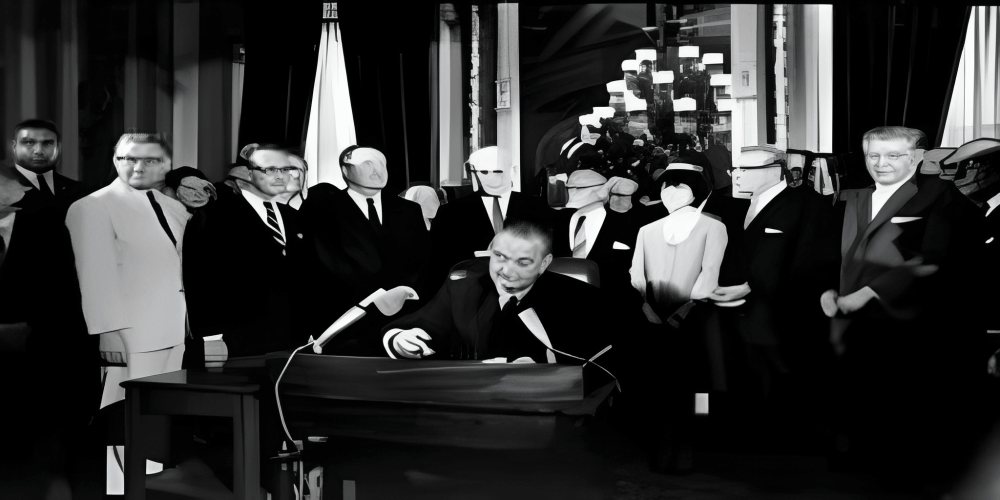
The original law signed by President Lyndon Johnson on August 6, 1965. The Voting Rights Act of 1965 came directly out of the Selma marches and Bloody Sunday, where police beat peaceful protesters. The Fifteenth Amendment had been on the books since 1870, but it was largely ignored in the Deep South. The Voting Rights Act of 1965 changed that. Within four years, Black voter registration in Mississippi climbed from six percent to nearly sixty percent. Historians call the Voting Rights Act of 1965 the most effective civil rights law ever passed. It has been amended five times, but the central promise remains the same.
FREQUENTLY ASKED QUESTIONS ABOUT THE VOTING RIGHTS ACT
Q1: Which states were fully covered under the original Voting Rights Act preclearance formula?
A: The original Voting Rights Act covered Alabama, Alaska, Georgia, Louisiana, Mississippi, South Carolina, Virginia, and parts of Arizona, Hawaii, and Texas. A few counties in North Carolina and California also fell under coverage. The formula looked for two things: a test or device in November 1964, and voter registration or turnout below fifty percent. That is how the Voting Rights Act drew its first map.
Q2: Does the Voting Rights Act still require federal preclearance today?
A: No. Not really. The Supreme Court’s Shelby County decision in 2013 killed Section 4(b) of the Voting Rights Act. That section held the coverage formula. Without a valid formula, Section 5’s preclearance requirement has no effect. So no jurisdiction has to send voting changes to Washington anymore. Section 2 of the Voting Rights Act still works, but that only lets you sue after a discriminatory law passes. You cannot stop it ahead of time.
Q3: What is the difference between Section 2 and Section 5 of the Voting Rights Act?
A: Section 2 of the Voting Rights Act is permanent and nationwide. It bans any voting practice that discriminates based on race or language. If a town passes a discriminatory law, you can sue under Section 2. But the harm has already happened. Section 5 of the Voting Rights Act was different. It required preclearance. Covered jurisdictions had to get approval before changing anything. Section 5 was preventive. Section 2 is reactive. Since Section 5 of the Voting Rights Act cannot be enforced today, Section 2 carries the whole weight.
Q4: Can the Voting Rights Act be used to challenge voter ID laws?
A: Yes. Courts have heard many challenges to voter ID laws under Section 2 of the Voting Rights Act. The plaintiff must show that the ID law has a disparate impact on minority voters. And that the state’s justification does not outweigh that impact. In North Carolina, a federal court struck down an ID law under the Voting Rights Act. Why? Because the legislature asked for data on how Black voters used certain IDs, then banned precisely those IDs. That kind of evidence makes the Voting Rights Act very effective.
Q5: How does the Voting Rights Act protect voters with limited English proficiency?
A: Section 203 of the Voting Rights Act forces certain counties and states to provide bilingual voting materials. That includes ballots, registration forms, signs at polling places, and oral translation help. As of a few years ago, the Voting Rights Act covered more than sixty language groups. Spanish, Mandarin, Vietnamese, Korean, Tagalog, Navajo, and Yupik are on the list. If a covered jurisdiction refuses to provide a Spanish ballot, the Justice Department can sue under the Voting Rights Act.
Q6: Has Congress ever attempted to fix the Voting Rights Act after Shelby County?
A: Multiple times. The John Lewis Voting Rights Advancement Act would create a new coverage formula. The new formula would look at recent voting rights violations in the last twenty-five years. Another bill called the Freedom to Vote Act would add extra protections alongside the Voting Rights Act. Neither bill has passed the Senate. The filibuster has blocked them. As of 2026, the Voting Rights Act’s preclearance remains broken. Most experts say only Congress can fix it, but Congress has not acted.
Q7: What types of voting changes required preclearance under the Voting Rights Act before 2013?
A: Almost any change affecting voting. Redistricting plans. Polling place moves. Changes to voting hours. Voter ID requirements. Reductions in early voting days. Voter roll purges. Switching from district elections to at-large elections. Moving a registrar’s office. Annexing land that changes demographics. The Voting Rights Act required every single change to get federal approval. Between 1965 and 2013, the Voting Rights Act rejected or blocked more than one thousand discriminatory changes. Many of those changes never saw the light of day.
Q8: Can an individual sue under the Voting Rights Act without a lawyer?
A: Technically, yes. The Voting Rights Act allows private parties to file lawsuits. But practically, no. Voting Rights Act cases require statistical analysis, expert witnesses, and historical evidence. Courts apply a complex “totality of circumstances” test. A person without a lawyer would struggle. That said, organizations like the ACLU, NAACP Legal Defense Fund, and Lawyers’ Committee for Civil Rights Under Law bring Voting Rights Act cases for free. The Department of Justice can also intervene. So individuals usually get representation through those channels.
Q9: Does the Voting Rights Act apply to federal elections only or also to state and local elections?
A: The Voting Rights Act applies to every election. Federal, state, county, city, school board, and even ballot initiatives. Any election run by a state or local government falls under the Voting Rights Act. The Fifteenth Amendment gives Congress that authority. So state laws that conflict with the Voting Rights Act get pushed aside. That is a key feature of the Voting Rights Act: it overrides local rules when discrimination is involved.
Q10: How can citizens help restore the Voting Rights Act?
A: Several ways. Call or write your members of Congress. Tell them to support the John Lewis Voting Rights Advancement Act. Donate to civil rights groups that bring Voting Rights Act lawsuits. Watch for local voting changes like polling place closures or new ID rules. Report suspicious changes to the Justice Department’s voting section. Serve as a poll worker or election observer. The Voting Rights Act works best when ordinary people pay attention. Without public pressure, the Voting Rights Act might stay broken for a long time.
Leave A Comment
0 Comment